Tisza Plans Austerity Measures The Gen Z Only Read About In History Books

The director of the Budapest-based Center for Fundamental Rights assessed 2025 as a strong but still-unfinished year, with the focus shifting to defending sovereignty, standing firm in ideological battles, and preparing for the 2026 elections. According to the think tank, the political season is now entering its decisive phase, and next spring CPAC Hungary is expected to return, having become one of the key gathering points for the international right. We spoke with director Miklos Szatho about the challenges facing Hungary.

2025. 12. 29. 16:57
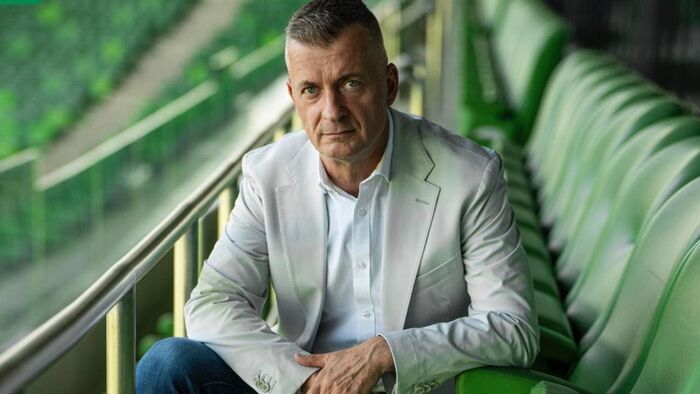
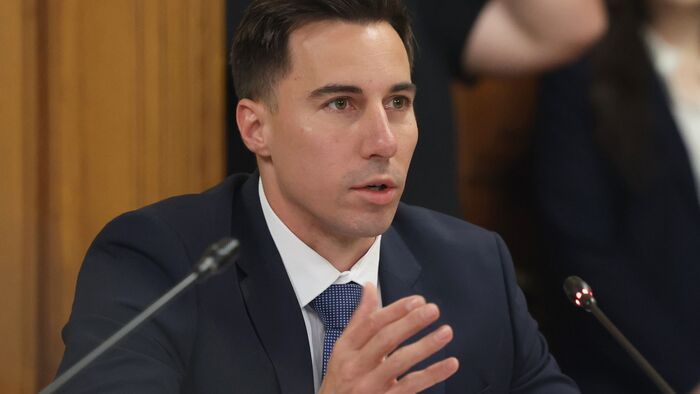
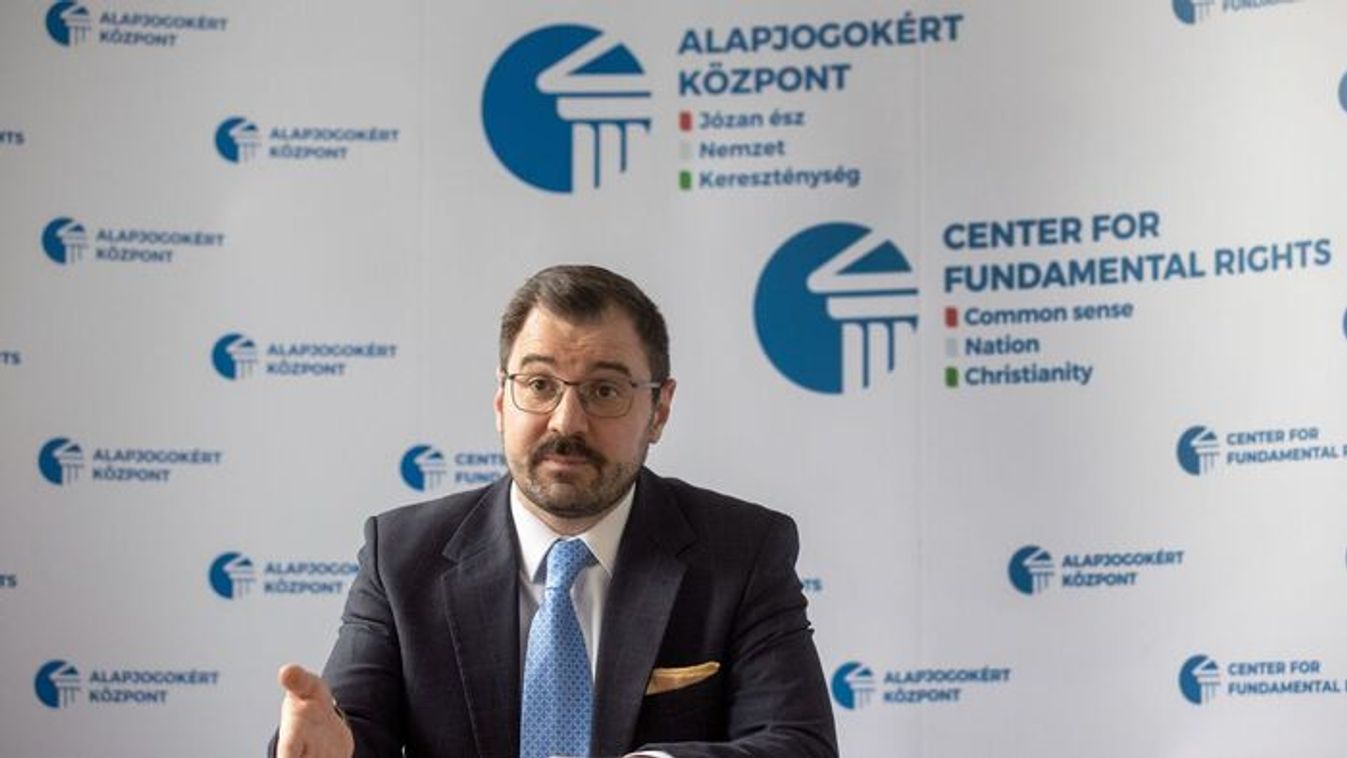
Miklos Szantho, Director General, Center for Fundamental Rights (Source: Center for Fundamental Rights)
VéleményhírlevélJobban mondva - heti véleményhírlevél - ahol a hét kiemelt témáihoz fűzött személyes gondolatok összeérnek, részletek itt.

– As the year winds down, how do you assess the Center for Fundamental Rights’ work in 2025? And perhaps the question on most people’s minds: will there be another CPAC Hungary next year?

– I could say it’s been a strong year, but in reality, 2025 won’t end until April 12, 2026. The fall political season has wrapped up, and the spring session is coming — only then will a champion be declared. For the Hungarian right, and for our think tank (AJK) as well, this year was all about preparation, and above all, defending sovereignty. Now, at year’s end, we’re regrouping our energy so that everyone can work 200 percent toward the big, shared goal: making Hungary great and prosperous. And yes, by the way, I hope that

next spring’s CPAC Hungary will serve that purpose once again.

And if everyone “acts as they must, then everything will turn out as it must.

– You mentioned that 2025 was a year of defending sovereignty. Which were the most important battles in this regard?

– I believe the world is undergoing fundamenta changes — not just geopolitically, but also ideologically, with Donald Trump and the Orban-led Patriots being the elemental expression of this shift. The big problem ahead is that the Western globalist powers, especially Brussels, have become prisoners of their own narrative: they don’t dare, and therefore cannot, admit that they’ve driven European civilization to the edge — as the recent U.S. National Security Strategy also underlines. Brussels faces an elite crisis; the West faces a social crisis. There’s no real vision for life. In Europe, people aren’t having children; instead, there is growing glorification of sexual deviance.

They treat migration as an ‘opportunity,’ not a threat, just like the war in Ukraine. 

Of course, they don’t want to face the consequences. They want to spread their mess elsewhere, and tat’s why they are funding the Hungarian left, including Tisza, to ensure that their central will is enforced by someone here as well.

– You emphasized that the question of sovereignty now transcends daily politics. Where do you see Europe's civilizational fault line that will shape the continent’s future on the long term?

– Clearly at the question of whether will Europe remain European, or Hungary Hungarian, or will we dissolve into an externally controlled, identity-less globalist empire? The liberals’ ‘offer’ once seemed simple and attractive: they convinced people that politics could be based on neutral worldview views, urgint them to leav politics to them, the ‘experts,’ who would deliver economic performance. But it's all turned out to be a lie. Istvan Csurka pointed this out early on, when he used the phrase ‘expertise is a Bolshevik trick.’ Using their mantra of neutrality,

they essentially took over culture and the mind industry, while the neoliberal austerity-based dogma — wanting to stage a comeback in Hungary under the guise of Tisza — was incapable of successful economic policy. 

That’s why, in times of tough troubles, the right and the center-right were occasionally ‘let back in’ to fix the finances, but in terms of ideology, these parties were devoured by the politically correct, progressive mainstream.

By now, it's become clear that Europe suffers from serious leadership problems, compounded by accumulated issues: the migration crisis, declining public safety, demographic and competitiveness decline, the erosion of the welfare state, and the rise of ‘far-right’ parties — all existential threats to the old political elites. 

And they see war as the solution.

That’s precisely why they treat war as an opportunity, rather than a source of danger; and the more money they keep pouring in, the more inevitable a final clash with Russia appears to them. 
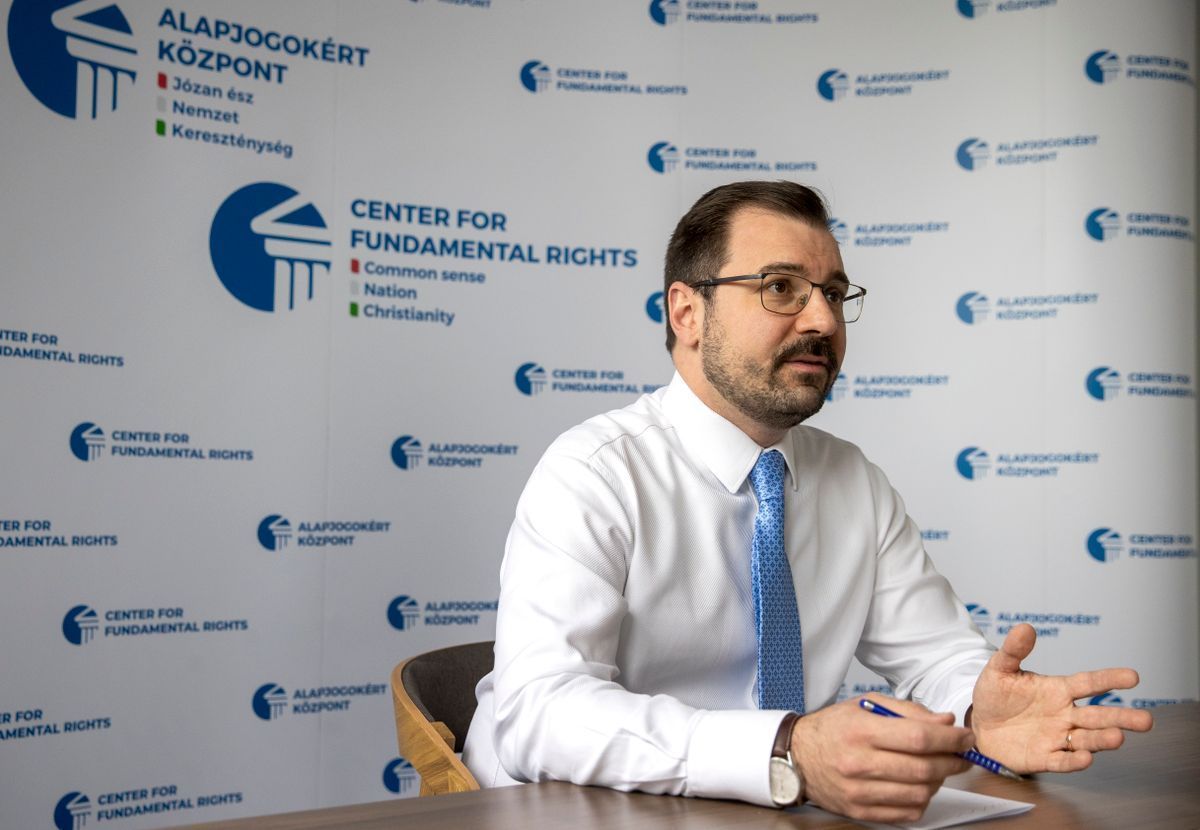
Miklos Szatho, director general of the Center for Fundamental Rights (Source: Center for Fundamental Rights)

– Looking at the political battles in the digital sphere, it’s become clear that the Digital Civic Circles (DPK) have been able to stand up to global influence, becoming an active force shaping public opinion on the sovereigntist side. How would you assess their performance so far, and how can the DPK continue to be a lasting social force online?

– We’re seeing the same pattern play out in Hungary as elsewhere over the past 15–20 years: the right has moved into a space once considered a liberal stronghold. The DPKs are a symbol of the rise of national algorithms, and as a founder of the Sovereignty Protection DPK, I can confidently call it an unqualified success. Our strength and competitive advantage lie in the right being community-oriented:

here, the digital freedom struggle is organized around real, flesh-and-blood groups and existing social connections. On the other side, the aim is to forge physical networks out of online groups that have no genuine human ties.

That can work for a while, but fake profiles and trolls will never become a real, living community — it all crumbles quickly. 

I believe this also explains the year’s most important political development: since early summer, a clear turning point has emerged in Hungarian politics. The Tisza balloon, artificially inflated by the left-wing media machine, began to deflate, and nothing was holding it up. Scandals erupted, leaked recordings surfaced,

and the austerity package — which would have hit Tisza’s urban, higher-income intellectual and entrepreneurial base the hardest — became public. Pressure from their pro-war handlers in Brussels grew ever more obvious. Mr. Magyar’s speeches grew tedious, and his audience vanished.

The right, however, held firm. Through persistent work both on the ground and online, it reclaimed the initiative. Instead of proposing tax hikes, it delivered real tax cuts, kept Hungary out of the war, and resisted Brussels’ attempts at blackmail. The takeaway is clear: for Hungary, there is only one choice — the right.

– You've set up the #Free Hungarians Against Austerity” task force. What alternative policy responses can this present against Tisza's leaked package?

– 2025 was the year of exposure for the Tisza Party: they are preparing austerity measures that Generation Z has only read about in history books. While a Tisza-affiliated judge might even ban these measures, like they did with the Bors newspaper, we hope the Task Force won’t be targeted. Our aim is precisely to show how the hidden fruits of a “love affair” between Lajos Bokros and Brussels bureaucrats would devastate workers, families, entrepreneurs, and pensioners. The proposed austerity package totals 7,250 billion forints and would tax gross wages starting at 412,000 forints at 22 percent instead of the current 15 percent—amounting to an annual loss of 150,000–200,000 forints even at average income, not to mention cuts to family tax benefits. Corporate tax for small and medium-sized businesses would rise from 9 to 13.5–18 percent, and pensioners would lose their 13th and 14th-month pensions while still facing widow’s pension taxation.

Just as under Bela Kun, nothing that could be confiscated has escaped the notice of Tisza's left-wing experts: 

according to to their planned excise tax hike, beer would cost 350 forints more per liter, and wine 1,500 forints more. And that’s before we even get to Laszlo Keri and his longtime dream — a privatized pension and healthcare system. The saying seems true: under a right-wing government, even those who don’t vote for it can benefit. Under Tisza’s rule, however, even those who do vote for it would come out worse. The task force’s goal is clear: while people can keep complaining about “Orban and his team” or falling for the left wing’s fake news campaigns, everyone should sit down and do the math before April.

– Nearly three years after the outbreak of the war in Ukraine, do you think we are closer to peace, or are we moving toward an escalating crisis? How do Western plans to freeze Russian assets and the European Parliament’s recent decisions on phasing out Russian natural gas fit into this picture?

– These steps point toward deliberate escalation. I would put it this way: while the world is moving out of the war, Europe is marching into it. There are many explanations for the “why”—misguided geopolitical assessments, emotional involvement, economic interests—but I would highlight two. The first is that 

Brussels wants Europe’s entry into the war to serve as a kind of “hellish purge” to erase existing social crises: who will care how many millions of illegal migrants arrive in the EU, or that drag queens “sensitize” children in kindergartens, while families pray that their sons aren't returned home in coffins?

The second explanation is far more material: Western powers and the EU have already poured hundreds of billions of euros into the war and into Ukraine—currently 90 billion euros in military loans. If it were up to Peter Magyar, 400 billion forints would have gone to Hungary. But this money will never be seen again—unless Russia is defeated, crushed on the battlefield, and forced to pay reparations. So Brussels is chasing its money, which will turn into blood tomorrow. And let’s not forget: 

in the age of nuclear weapons, in a world war, the first to shoot is the second to die.

– Do you consider Trump bringing the Ukraine war to an end in the near future a realistic scenario?

– The only person whose pressure could bring peace here is Donald Trump. He — and Viktor Orban — truly understand that the world order is shifting, and if the West doesn’t act in its own interests, it will be lost. The U.S., for its part, is acting accordingly: it talks with Russia, doesn’t play global ideological cop like the Democrats, and seems to be preparing for a long-term competition and coexistence with China. In this new arrangement, Europe plays an ever-smaller role and is already falling behind in the global economic race. Its vital interest would be not to sacrifice itself on Ukraine’s blue-and-yellow altar; it should have every reason to prevent Moscow from falling into China’s arms — yet that is exactly what it’s doing. China has now become the largest buyer of Russian raw materials, including LNG.

Brussels is starting to resemble a mental hospital where the patients have taken control. 

Only Viktor Orban is drawing attention to this. If Europe does enter the war—which I think is unfortunately likely—Hungary must stay out. This is a matter of fundamental importance for the survival of the Hungarian nation.

– How does Trump’s worldview differ from the current progressive-globalist direction?

– I think the difference is simply that he is normal—which, considering today’s Western political elite, is remarkable. He hasn’t been brainwashed by woke ideology, he doesn’t want to rewrite history, he doesn’t divide society based on sexual or “gender” identities, and he doesn’t think national pride is a fleeting romantic fancy. Common sense, patriotism, and a commitment to peace — this is what connects the American and Hungarian right. And this is what frustrates progressive globalists, from Soros to Ms. von der Leyen, from Peter Magyar to Telex's editorial office.

– How might the strengthening of international right-wing networks reshape political power balances in Europe?

– I think there is hope—of which the Hungarian right is a driving force—but I would not fall into the trap of wishful thinking. There is no real democracy in Western Europe today; there is no freedom of opinion; the old elites do everything they can through their controlled institutions to prevent regime change. Of course, you already have Babis or Fico supporting Hungary, but in Poland, the rule of law has been dismantled; in Austria, even if the FPÖ wins, it cannot govern; in the Netherlands, Wilders could not be a government member; the AfD is on the brink of being banned; Le Pen cannot run in the next French election. The latter, as a founding member state, is key in my view: if Jordan Bardella, planned to run instead of Le Pen, can win—or more precisely, is allowed to win—the 2027 presidential election, it could be a turning point. If not, Western Europe is lost.

– Finally, if you had to sum up in one sentence, what is the biggest stake for Hungary and, more broadly, Europe in 2026?

– Let’s be selfish and leave Europe alone! For Hungary, the main stake in the coming year’s election is how to stay out of the war, if Europe should decide to enter it over Ukraine, against Russia. And, most importantly: 

who can keep Hungary out of this war? 

The answer, in one sentence, is Viktor Orban. So the motto for 2026, then, is: "rise, to victory!"

Cover photo: Miklos Szantho, Director General, Center for Fundamental Rights (Source: Center for Fundamental Rights)

Komment

Összesen 0 komment

A kommentek nem szerkesztett tartalmak, tartalmuk a szerzőjük álláspontját tükrözi. Mielőtt hozzászólna, kérjük, olvassa el a kommentszabályzatot.


Jelenleg nincsenek kommentek.

Szóljon hozzá!

Jelenleg csak a hozzászólások egy kis részét látja. Hozzászóláshoz és a további kommentek megtekintéséhez lépjen be, vagy regisztráljon!

A téma legfrissebb hírei

Tovább az összes cikkhez chevron-right

Ne maradjon le a Magyar Nemzet legjobb írásairól, olvassa őket minden nap!

Google News
A legfrissebb hírekért kövess minket az Magyar Nemzet Google News oldalán is!

Címoldalról ajánljuk

Tovább az összes cikkhez chevron-right

Portfóliónk minőségi tartalmat jelent minden olvasó számára. Egyedülálló elérést, országos lefedettséget és változatos megjelenési lehetőséget biztosít. Folyamatosan keressük az új irányokat és fejlődési lehetőségeket. Ez jövőnk záloga.