Brussels Doubles Down on War Funding, Struggles With Board of Peace

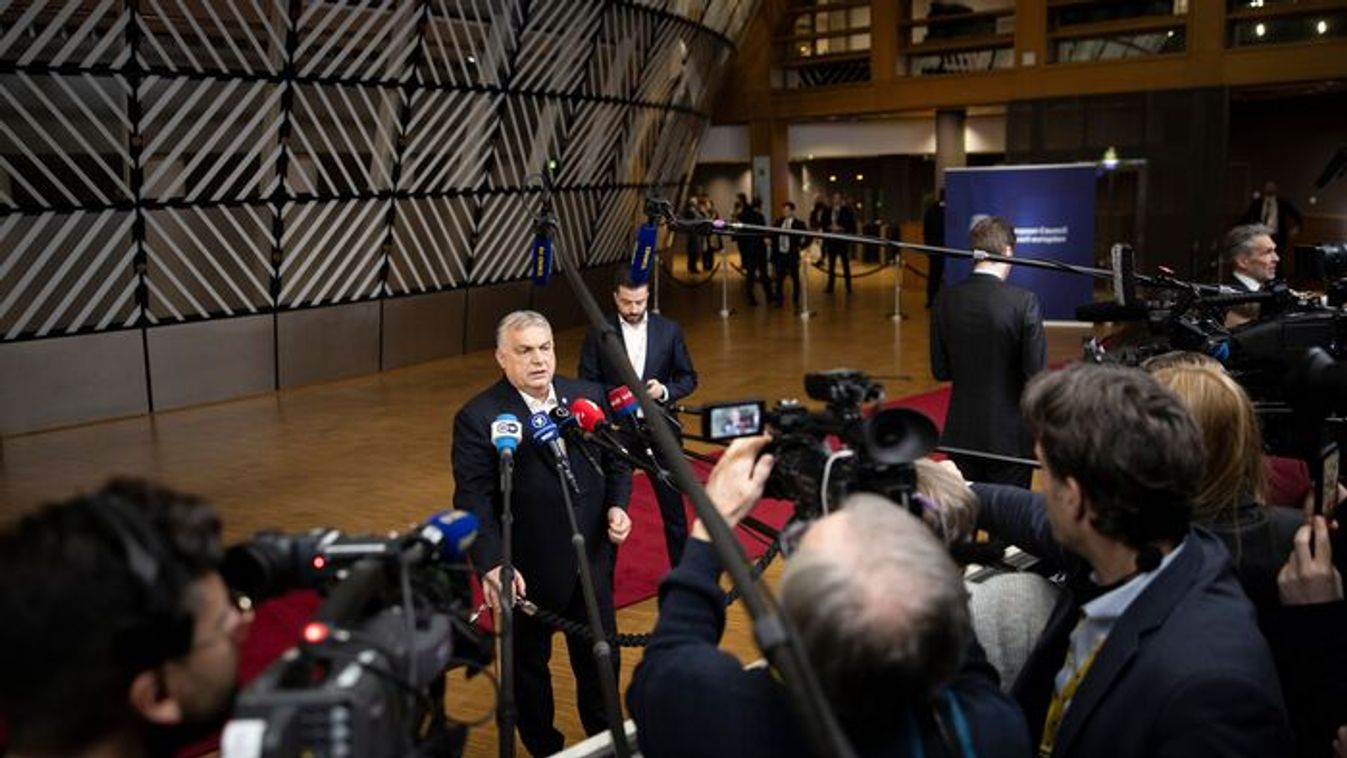
Following the EU summit, Hungarian Prime Minister Viktor Orban held a press conference in Brussels. Speaking to reporters after the meeting, PM Orban said that leaders were presented with a document stating that the European Union had accepted Ukraine’s demand for $800 billion in funding. Responding to Ukrainian President Volodymyr Zelensky’s recent remarks attacking Hungary in connection with Ukraine’s EU accession, the prime minister declared: “For the next one hundred years, there will not be a single parliament in Hungary that votes in favor of Ukraine’s membership in the European Union.” He added that, in his view, Ukraine believes the only way to remove what it sees as the “Hungarian obstacle” is to install a Ukraine-friendly government in Budapest. He said opposition parties Tisza and the Democratic Coalition (DK) support Ukraine’s EU accession, and therefore, he argued, Ukrainians will inevitably play an active role in Hungary’s domestic election campaign, as they have a fundamental interest in a change of government in Hungary.

2026. 01. 23. 11:30
VéleményhírlevélJobban mondva - heti véleményhírlevél - ahol a hét kiemelt témáihoz fűzött személyes gondolatok összeérnek, részletek itt.

As previously reported, PM Orban traveled to Davos on Thursday, where he joined U.S. President Donald Trump in founding the Board of Peace. From Davos, Viktor Orban went on to Brussels for an extraordinary EU summit, which concluded with a press conference.

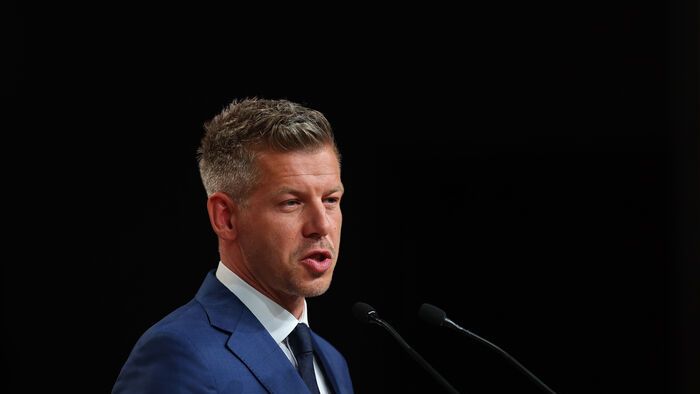
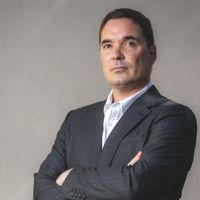
Orbán Viktor miniszterelnök Fotó: Miniszterelnöki Kommunikációs Fõosztály/Fischer Zoltán / MTI Fotószerkesztõség
Hungary's Prime Minister Viktor Orban (Photo: Prime Minister's Office Communications Department/Zoltan Fischer/MTI)

Speaking to reporters after the meeting, Orbán said that leaders were presented with a document stating that the European Union had accepted Ukraine’s demand for $800 billion in funding.

I don’t know whether this can be called an achievement, but it certainly felt like an atomic-strength kick to the chest. Until now, we thought Ukraine had made such a demand and that the Union might try to soften it. But no. The request was accepted in full, exactly as it came from Ukraine,

the prime minister said. He added that the main topic at the summit was effectively the newly formed Board of Peace itself. 

PM Orban explained that 

The confusion comes from how to relate to a new body that was openly created because the old ones no longer work, while there are serious problems in the world and someone has to make peace. A new organization is formed, some are invited, others are not, and the entire European Union now doesn’t know which foot to stand on. In Europe, only Hungary and Bulgaria supported the initiative outright. We said this is a good goal. The old organizations have failed, so let’s try something new.

He noted:

the United States has taken on a leadership role, while countries from crisis regions—Saudi Arabia, Qatar, Turkey, and Azerbaijan—have joined. Only two European countries are involved so far, but Hungary believes the effort is worth trying. No one can guarantee success, but this organization clearly has a better chance of achieving peace than the old ones that have already failed. EU leaders were preoccupied with whether to join or obstruct the initiative. That’s their problem, not ours. We are clear about what we want.

Responding to a question about a possible meeting involving the United States, Russia, and Ukraine, PM Orban said 

Hungary is also working toward that goal. Sooner or later, there will be a peace summit in Budapest. We don’t yet know exactly when or with which participants, but it is very much on the agenda—both in American notes and in our own working papers.

On Greenland, PM Orban said the issue had cooled rapidly.

Greenland—or, as the American president bluntly put it, ‘a piece of ice’—has been settled for now. There will be no tariffs, no military intervention, and everyone is interested in de-escalation, not inflaming tensions. The debate revealed sharply different views, with some insisting on cooperation with the United States at all costs, while others warned that similar situations could arise again in the future. It was a very diverse and useful debate.

PM Orban added that Hungary has always viewed the matter as a NATO issue rather than an EU one.

Reacting again to statements by President Zelensky, Orban said

Hungary must now get used to such rhetoric. There is a campaign underway. Elections are less than ninety days away. We don’t like it, but we understand it. The stakes of the Hungarian election are enormous not only for Hungary, but also for Ukraine, since the document in question envisions Ukraine joining the EU in 2027. This is not only about $800 billion or $200 billion, but about the timing of accession—and Hungary opposes it. I don’t believe there will be a Hungarian parliament in the next hundred years that votes for Ukraine’s EU membership.

He stressed that

Ukraine sees a government change in Hungary as the only way to overcome opposition to its accession. That's what they are working on. We obviously don't want their accession. The opposition Tisza and DK parties want Ukraine's membership. Ukraine will be active players in the election campaign. We are not happy about this, and it’s not a pretty thing—even if it’s understandable—but we will deal with it.

Hungary does not support Ukraine's accession to the EU or financial assistance

The prime minister also said that Brussels intends to channel massive sums of money to Ukraine.
 

The president of the European Commission most recently spoke of $170 billion. By my calculations, we are already at $193 billion, and now another $90 billion would be added.

EU planners intend to cover 2026–27 with this funding, then adopt a new budget in 2028 that would sideline Hungary and allocate even more money to Ukraine directly from the EU budget, rather than through separate loans. That is their plan. We want to stop it. We want a national government in Hungary that will not support Ukraine’s accession and will not support a budget that sends European money to Ukraine.

He stressed that 

Hungary does not oppose individual countries supporting Ukraine voluntarily. But why destroy the European Union for this? The EU should focus on its own affairs. If someone wants to fund Ukraine, they can do so outside the Union, on a voluntary, intergovernmental basis.


PM Orban also criticized the Tisza Party for staying away from a no-confidence vote against European Commission President Ursula von der Leyen.

“I come from the old school,” he said. “If there is an issue, you take a position. You either stand by someone or you say they’ve made such serious mistakes that they no longer deserve our confidence. Sneaking around may seem clever, but in politics, it never leads anywhere good.”


The Board of Peace Is Not Only About Gaza

The PM emphasized that the Bard of Peace goes beyond the Gaza conflict.

If it were only about Gaza, almost every EU country would be there,”
he said. “But because the Americans—also with our approval—designed it as something broader, even resembling a future UN-type initiative, it makes people here suspicious. EU leaders would like to participate in resolving Gaza but are reluctant to engage in building a wider international organization.

He said the United States has made its priorities clear:

First, stabilize Gaza. Second, make peace in Ukraine. Then we can deal with other issues. We think this is the right approach, but there is no consensus on this in Europe.

Asked whether the Board of Peace or cooperation with the European Union is more important for Hungarian foreign policy, PM Orban rejected the idea of an either-or choice.

That’s why Bulgaria’s presence is so important. We were not alone among EU members in signing the founding document. It would be difficult for an EU that sees itself as a global player to stay out of an organization that includes wealthy Arab states, Turkey, Egypt, and Israel.

Viktor Orban remarked:

Those who stay out will truly be left out. Domestic political pressures—especially related to Gaza—will make it hard for Western European countries to remain on the sidelines. We don’t have this problem in Hungary. We didn’t allow mass migration, and we don’t have large Muslim populations. But in Western Europe, Gaza is also a domestic political issue. In the end, some form of cooperation will be unavoidable.

Cover photo: Hungary's Prime Minister Viktor Orban (Photo: MTI)

Komment

Összesen 0 komment

A kommentek nem szerkesztett tartalmak, tartalmuk a szerzőjük álláspontját tükrözi. Mielőtt hozzászólna, kérjük, olvassa el a kommentszabályzatot.


Jelenleg nincsenek kommentek.

Szóljon hozzá!

Jelenleg csak a hozzászólások egy kis részét látja. Hozzászóláshoz és a további kommentek megtekintéséhez lépjen be, vagy regisztráljon!

A téma legfrissebb hírei

Tovább az összes cikkhez chevron-right

Ne maradjon le a Magyar Nemzet legjobb írásairól, olvassa őket minden nap!

Google News
A legfrissebb hírekért kövess minket az Magyar Nemzet Google News oldalán is!

Címoldalról ajánljuk

Tovább az összes cikkhez chevron-right

Portfóliónk minőségi tartalmat jelent minden olvasó számára. Egyedülálló elérést, országos lefedettséget és változatos megjelenési lehetőséget biztosít. Folyamatosan keressük az új irányokat és fejlődési lehetőségeket. Ez jövőnk záloga.