While Hungary continues to pursue good relations with Ukraine and has provided assistance to the country during the war, Orban said this cannot continue under conditions in which Ukraine has announced open interference in Hungary’s elections in support of the Tisza Party. The government, he added, will not allow Hungary’s future to be “consumed” through Ukraine’s welfare plan or its EU accession.
He further warned that policy advisers and candidate figures have appeared around the Tisza Party who not only support Ukraine’s EU membership but also back its accession to NATO. According to Orban, this now goes beyond intelligence-related assistance in developing the party's apps; the party also includes figures known internationally for acting “in line with Ukrainian interests.”
“These are not politicians from whom one can expect a firm defense of Hungary’s national interests or a willingness to say no to President Zelensky or European Commission President Ursula von der Leyen,” Orban said. “That can only be expected from a pro-nation, patriotic government and from Viktor Orban—and this will be one of the key stakes of the April elections.”
Addressing recent bomb threats targeting Hungarian and Transcarpathian schools, Orban said the situation appears to involve a coordinated threat spanning multiple countries, and it is the responsibility of authorities to uncover the source.
He urged the public to remain calm and to follow official guidance at all times.
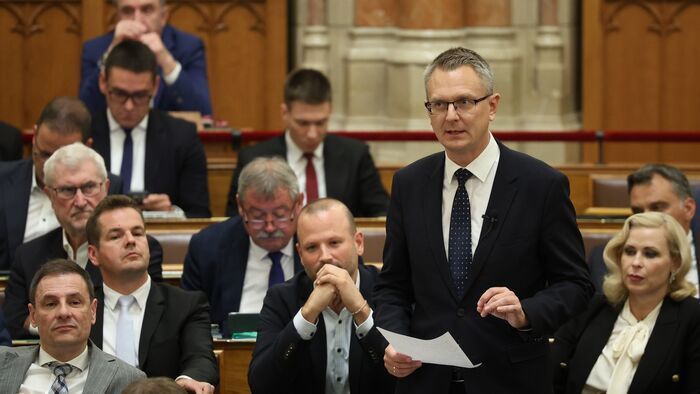
Orban also warned that efforts in Brussels to roll back national sovereignty are intensifying, with moves to restrict member states’ room for maneuver and potential veto rights.
He noted that politicians from both the Democratic Coalition (DK) and the Tisza Party have repeatedly argued that Hungary should give up its veto power and surrender elements of its sovereignty.