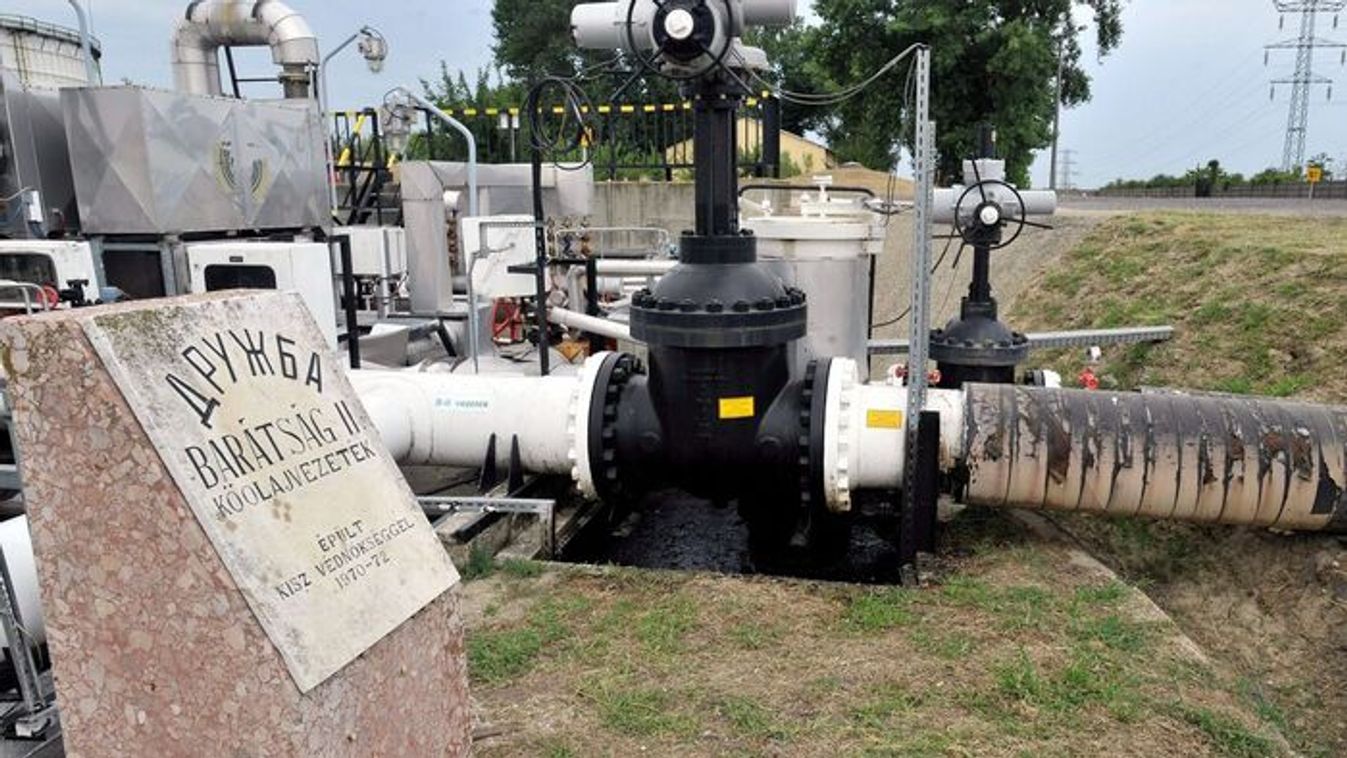
Hungary and Slovakia are paying a high price because Ukraine's leadership is not allowing the branch of the Druzhba oil pipeline leading to the region — halted on January 27 — to restart, even though affordable Russian energy had previously arrived reliably through it.

Technical obstacles having been removed, restarting Druzhba would be possible, yet Ukraine, most likely aligning with expectations from Brussels rather than acting independently, does not permit operation.
Although the Ukrainian side cites security and wartime risks, the decision clearly aligns with the policy of the European Commission to gradually push Russian energy carriers out of the EU market, even if the direct burden is borne primarily by Central European member states. In other words, Hungary and Slovakia are not suffering a temporary malfunction but a deliberately generated supply risk. As energy law expert Mate Toth stated on Hir TV’s Tuesday news broadcast, "Brussels violates six legal provisions by not forcing Ukraine to resume transit."
There Is Reserve Capacity, But Mol Had to Act
Mol must maintain crude oil processing and supply the market even without Russian oil deliveries, but now alternative routes must be used, entailing higher costs.
Within Mol’s refining division the shutdown mainly affects the Danube Refinery in Szazhalombatta and the Bratislava plant, both long optimized for Russian Urals crude.
Beyond logistical and financial challenges, the situation also creates refining technology tasks. After the third week of supply interruption, the Hungarian oil company initiated a partial release of strategic crude reserves at the Ministry of Energy to ensure continuous refinery operation. This does not solve the long-term shortfall but available reserves, including petroleum products and retail and wholesale stocks, cover roughly 90 days. Therefore no short-term price increase at gas stations is expected.
The Adriatic Route Is Expensive
At the same time Mol activated alternative supply routes, ordering shipments to the Croatian port of Omisalj, expected to arrive in early March. From there, it will take another 5–12 days for deliveries to reach Hungary via the Adriatic pipeline.
Technically, replacement is partly possible but much slower than continuous Druzhba deliveries. Moreover, alternative procurement is 25–28 percent more expensive than Russian oil, plus a Croatian transit fee five times the European average, Mate Toth pointed out on social media. If Druzhba does not restart, 42,000 tons of fuel per day would have to be supplied by other means, which is equal to 800 rail tank cars or 170 tanker trucks.
"The Adriatic pipeline’s pumping capacity still cannot fully replace Druzhba. The origin of crude also matters: the refineries were originally designed for Russian Urals crude. Mol has already spent 170 million dollars upgrading the Adriatic line and another 500 million converting refineries, but the process is not finished," Mate Toth explained. Although non-Russian oil can be processed, changing blending ratios significantly worsens yield and cost levels. However, Mol’s financial capacity remains sufficient to manage the situation, and fuel price increases are not expected in the short term.


Szóljon hozzá!
Jelenleg csak a hozzászólások egy kis részét látja. Hozzászóláshoz és a további kommentek megtekintéséhez lépjen be, vagy regisztráljon!