The energy crisis, sanctions, and carbon taxes that are high even by global standards have caused significant price increases on European electricity and gas exchanges. In those EU member states where household tariffs are regulated more loosely, market processes have directly appeared in household energy costs. As a result, today an average EU citizen pays significantly higher electricity and gas bills than, for example, an American consumer.
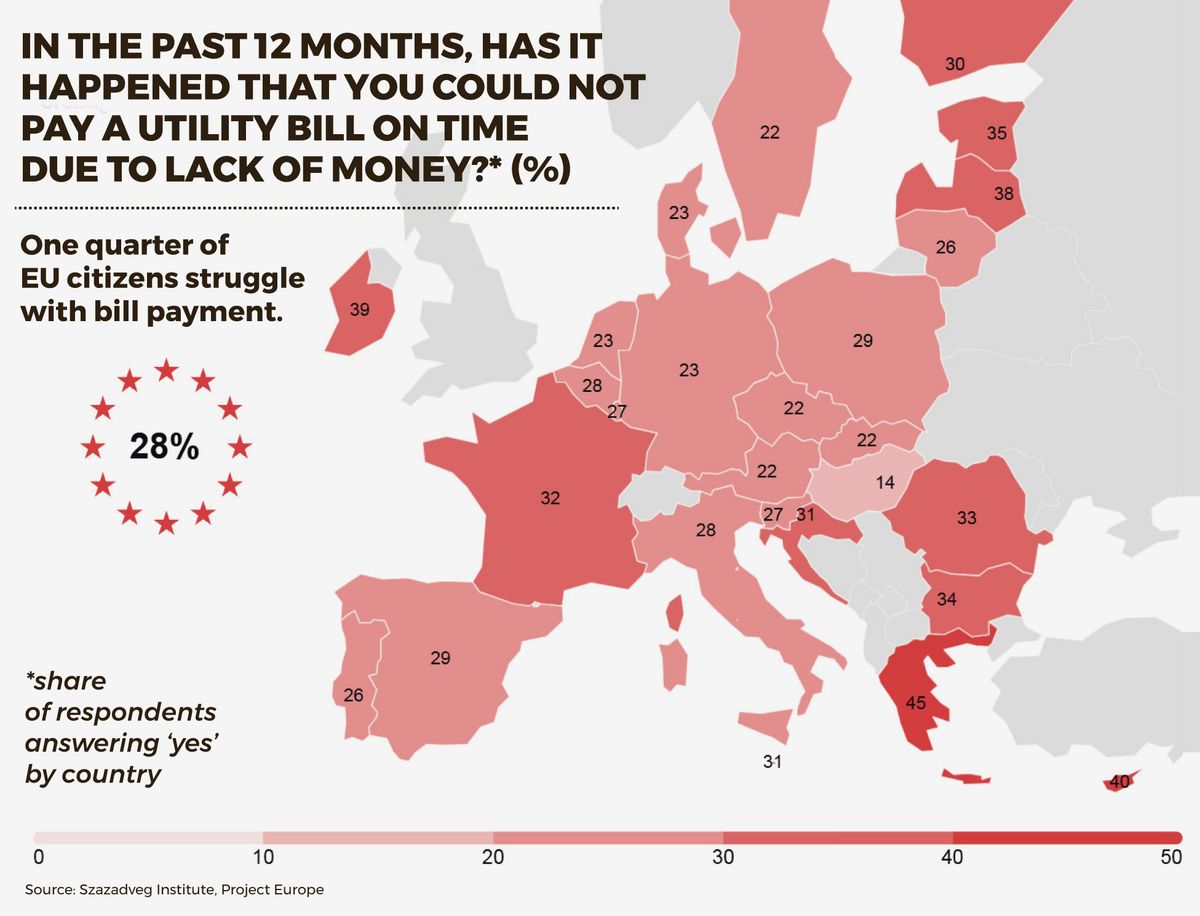
According to the latest results of Szazadveg's Project Europe research, the rapid and substantial increase in living costs has caused serious existential difficulties for broad segments of society across Europe. Twenty percent of the EU population cannot properly heat their homes, while 28 percent have experienced in the past year that, for financial reasons, they were unable to pay their utility bills on time.
Differences between member states are mainly explained by different solutions in tariff regulations and households’ ability to adapt. The proportion of those struggling with heating is lowest in Hungary (5 percent), Finland (10 percent), and Luxembourg (12 percent), while it is highest in France (28 percent), Cyprus (30 percent), and Greece (45 percent).
Hungary’s favorable data is primarily the result of the utility cost reduction program, which, alongside strict state price regulation, provides the lowest household tariffs within the European Union.
In Finland, the high share of wood-based heating reduces costs, as these have increased much less in recent years compared to gas and electricity prices. In Luxembourg, high income levels provide broader protection for households.