Iran Conflict Could Reshape the Middle East and Global Oil Markets

Benjamin Netanyahu announced that Israel and the United States have launched a joint military operation to eliminate the threat posed by the Iranian regime. According to the Israeli Prime Minister, the operation, called Roaring Lion, aims to prevent Iran’s leadership from obtaining nuclear weapons. Omar Sayfo, head of research at the Migration Research Institute, talked to Magyar Nemzet about the consequences of the situation, Iran’s room for maneuver, the stability of the region, and the potential effects on the oil market and migration.

2026. 03. 01. 16:24
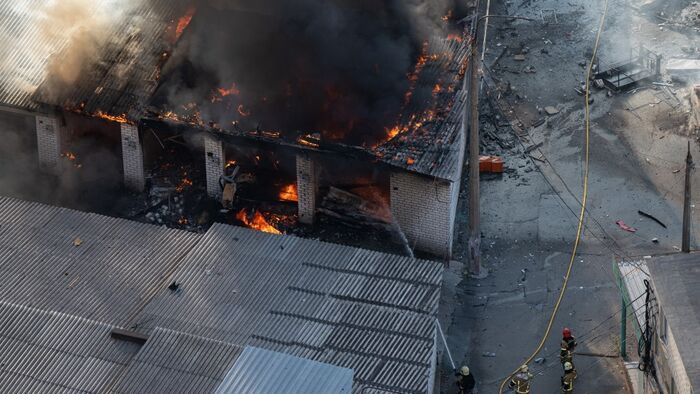
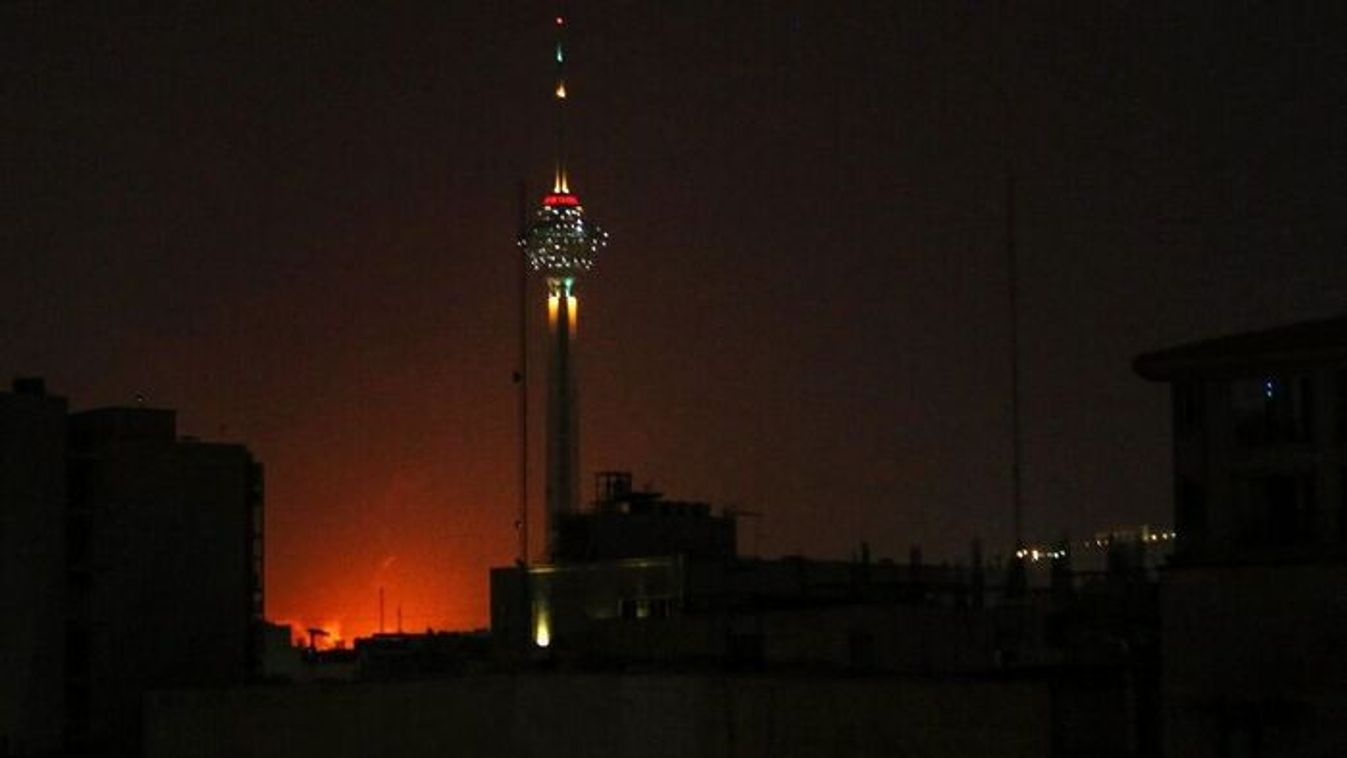
Explosions shook Iran's capital (Photo: AFP)
VéleményhírlevélJobban mondva - heti véleményhírlevél - ahol a hét kiemelt témáihoz fűzött személyes gondolatok összeérnek, részletek itt.

As also reported by Magyar Nemzet, Israeli Prime Minister Benjamin Netanyahu announced that Israel and the United States have launched a joint military operation to eliminate the threat posed by the Iranian regime. The Israeli Prime Minister said that the goal of Operation Roaring Lion is to prevent Iran’s leadership from acquiring nuclear weapons. Omar Sayfo, head of research at the Migration Research Institute, answered our questions.

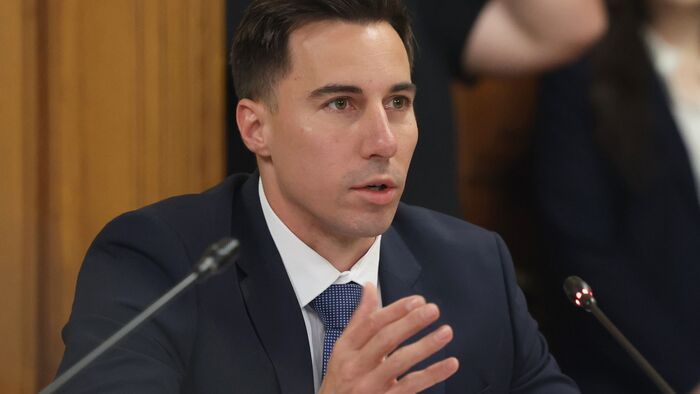
Sayfo Omar: Irán miatt most dől el a Közel-Kelet sorsa és az olajpiac jövője (Fotó: AFP)
 Omar Sayfo: The fate of the Middle East and the future of the oil market are now being decided because of Iran (Photo: AFP)

In recent years the Middle East has become more stable overall as Iran has weakened. Until recently Iran maintained a very strong presence through its proxy network, which includes both state and non-state actors in Iraq, Syria, Lebanon, and the Palestinian territories. This proxy network has weakened significantly in recent times, and now most countries maintain good relations with the United States, or at least cooperate with it in some form,

the expert explained. He added that this development has contributed to stabilizing the Middle East over roughly the past two years, since the beginning of the war in Gaza. However, he emphasized that the outcome of what is unfolding now cannot yet be predicted.

What we can see is that Iran has limited options for retaliation. We do not know exactly what missiles it has or how many of them, but this will likely become clearer in the coming days. What is certain is that Iran’s proxy network is in very poor condition, meaning it can involve them in a retaliatory strike to a much smaller extent than it would prefer,

he stressed. He also pointed out that in Iraq various Shiite groups already stayed out of the earlier 12-day war, largely because they knew they would be exposed to Israeli and American counterstrikes. For them it was more important to preserve their domestic political position and their political and economic status within Iraq. Syria has now effectively joined the American camp. In Lebanon, Hezbollah has become a shadow of its former self, having lost a significant portion of its missiles and almost all of its military leadership.

The current leader of Hezbollah, Naim Qassem, comes from a civilian background and therefore is not a battle-hardened figure like his predecessor or other leaders who were lost. Rhetorically, he still stands by Iran, of course. This is important for several reasons, including the fact that Hezbollah members continue to receive their salaries from Iran, and in dollars. Therefore it is important for them to show verbal support, but they have very limited capacity to give any response to Israel,

the expert explained. Based on recent experience, it can also be said that the Houthi rebels had already tried to back out during the Gaza conflict. Iran therefore has relatively few partners it can rely on.  At the same time, the situation in the Middle East has a destabilizing effect on global oil prices and on the entire region, especially if civilian air traffic and air cargo transport are suspended due to attacks and military operations.

Oil prices have already begun to rise. In general, the likelihood or expected duration of a conflict can often be measured by movements in the oil market. During the 12-day war, the oil market priced in the conflict very accurately, and at that time there was no significant increase. Now there has been some increase, but the operation only began today. In a few days it will be possible to see how the oil market is pricing in the situation,

Omar Sayfo explained. If Iran were to close the Strait of Hormuz, the expert continued, it would harm several Arab countries, including Saudi Arabia, Kuwait, and the United Arab Emirates. The latter would be affected to a lesser extent because they are also able to transport oil over land to the Indian Ocean. However, such a step would primarily harm Iran itself, because a significant portion of its own oil exports passes through the strait. In that case Iran would lose a substantial share of its revenue, especially at a time when it urgently needs income. Recent protests that shook the country were largely triggered by the difficult economic situation.

In the energy sector the situation is particularly problematic, especially for a country like Hungary. In terms of migration, the Middle Eastern conflict could affect Hungary indirectly. There are already Iranian refugees in Turkey, and there are also large numbers of Afghans in Iran. Many of them would likely continue their journey toward Turkey. However, Turkey has built a border fence along almost the entire length of its border with Iran, which could slow down the flow.

If the situation does not stabilize and a power vacuum emerges, possibly even a civil war scenario, that could create very strong migration pressure on Europe,

Omar Sayfo explained. He added that Turkey would likely be able to stop such a migration wave, but it would demand a substantial price from Europe, just as it did in 2016 in the case of Syrian refugees.

The general uncertainty is present across the entire international arena. Many analyses driven by hopes or fears are circulating, and all of them should be treated with caution because reliable information is limited. We do not know exactly who has been eliminated. We  do not know whether the United States has a potential candidate in Iran for the next phase, as it did in Venezuela after the forced departure of Maduro.

Moreover, unlike Venezuela, Iran is “not a one-man show.” The country has a political structure, and if the supreme leader were eliminated, a new leader could be elected with the support of the Revolutionary Guard. The Revolutionary Guard, with roughly 200,000 armed personnel, is an unavoidable factor in Iran. It also controls about one-third of the country’s economy and will not disappear easily. They could designate a successor, or someone could emerge who enjoys their support. Alternatively, a council, for example a three-member body, could be appointed until a new leader is chosen. At the moment there are more questions than answers, the expert concluded.

Cover photo: Explosions shook Iran's capital (Photo: AFP)

Komment

Összesen 0 komment

A kommentek nem szerkesztett tartalmak, tartalmuk a szerzőjük álláspontját tükrözi. Mielőtt hozzászólna, kérjük, olvassa el a kommentszabályzatot.


Jelenleg nincsenek kommentek.

Szóljon hozzá!

Jelenleg csak a hozzászólások egy kis részét látja. Hozzászóláshoz és a további kommentek megtekintéséhez lépjen be, vagy regisztráljon!

A téma legfrissebb hírei

Tovább az összes cikkhez chevron-right

Ne maradjon le a Magyar Nemzet legjobb írásairól, olvassa őket minden nap!

Google News
A legfrissebb hírekért kövess minket az Magyar Nemzet Google News oldalán is!

Címoldalról ajánljuk

Tovább az összes cikkhez chevron-right

Portfóliónk minőségi tartalmat jelent minden olvasó számára. Egyedülálló elérést, országos lefedettséget és változatos megjelenési lehetőséget biztosít. Folyamatosan keressük az új irányokat és fejlődési lehetőségeket. Ez jövőnk záloga.