Asked whether it is possible that soldiers could appear on city streets in the coming weeks, the prime minister said this would only happen if the Middle East conflict significantly increases the terrorist threat. He explained that if Hungary’s Defense Council determines that the level of terrorist danger has risen, the government will take the necessary steps because the security of Hungarian citizens comes first. He noted that there are Iranian citizens living in Hungary and many Iranian students studying in the country. Hungary is part of the Schengen area, meaning that people with Middle East background move freely across borders. Authorities must therefore remain vigilant and monitor developments carefully. He added that financial channels suspected of being linked to terrorist organizations are also being investigated. “The gentlemen are working, and we do have problems,” he said when asked whether the financial investigations had uncovered anything.
PM Orban: Staying out Is Key in Next Four Years
 Itt állíthatja be, hogy a Google keresőben elsők között legyen a Magyar Nemzet
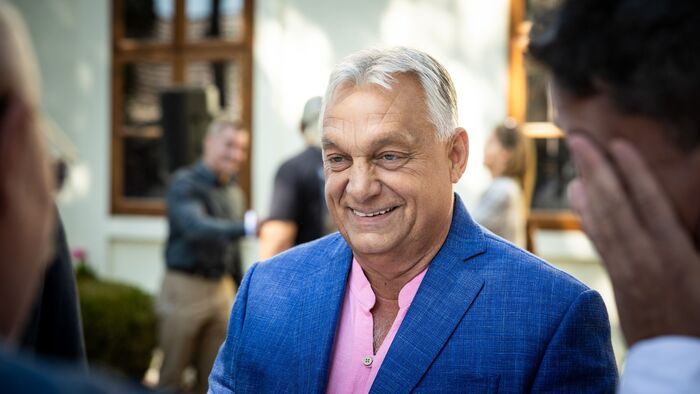
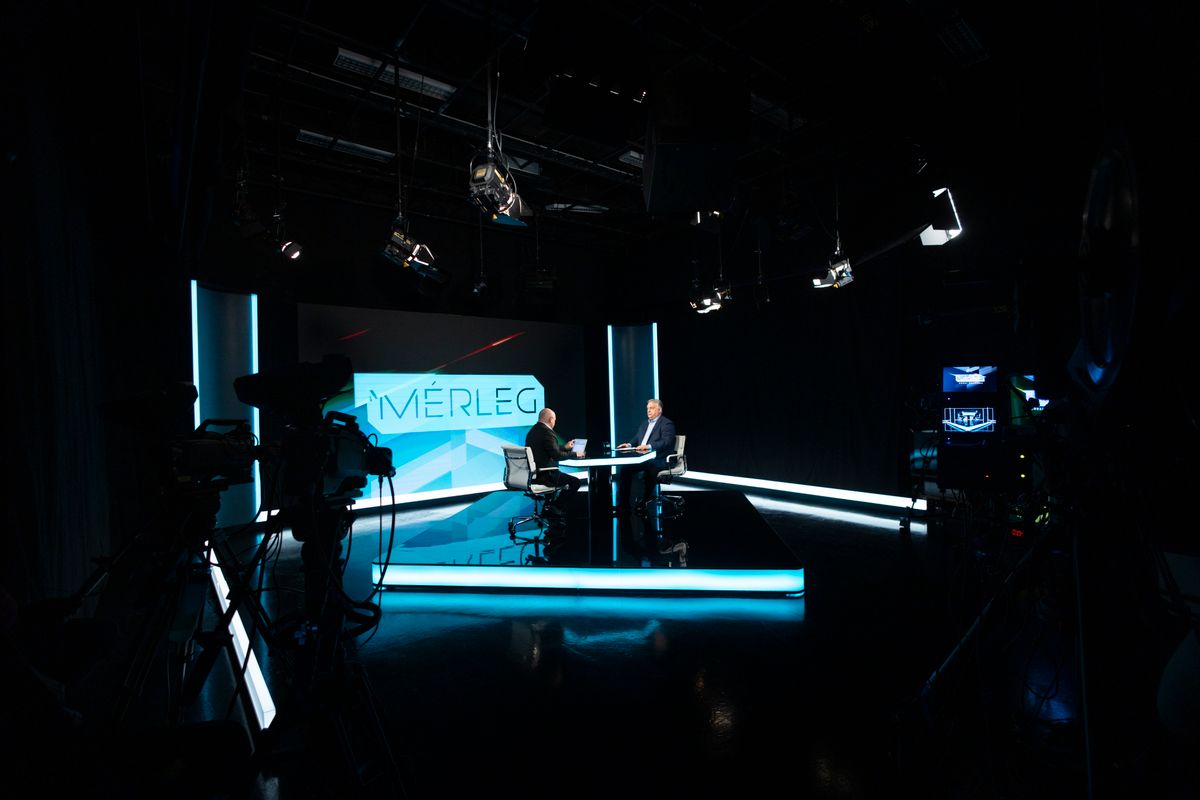
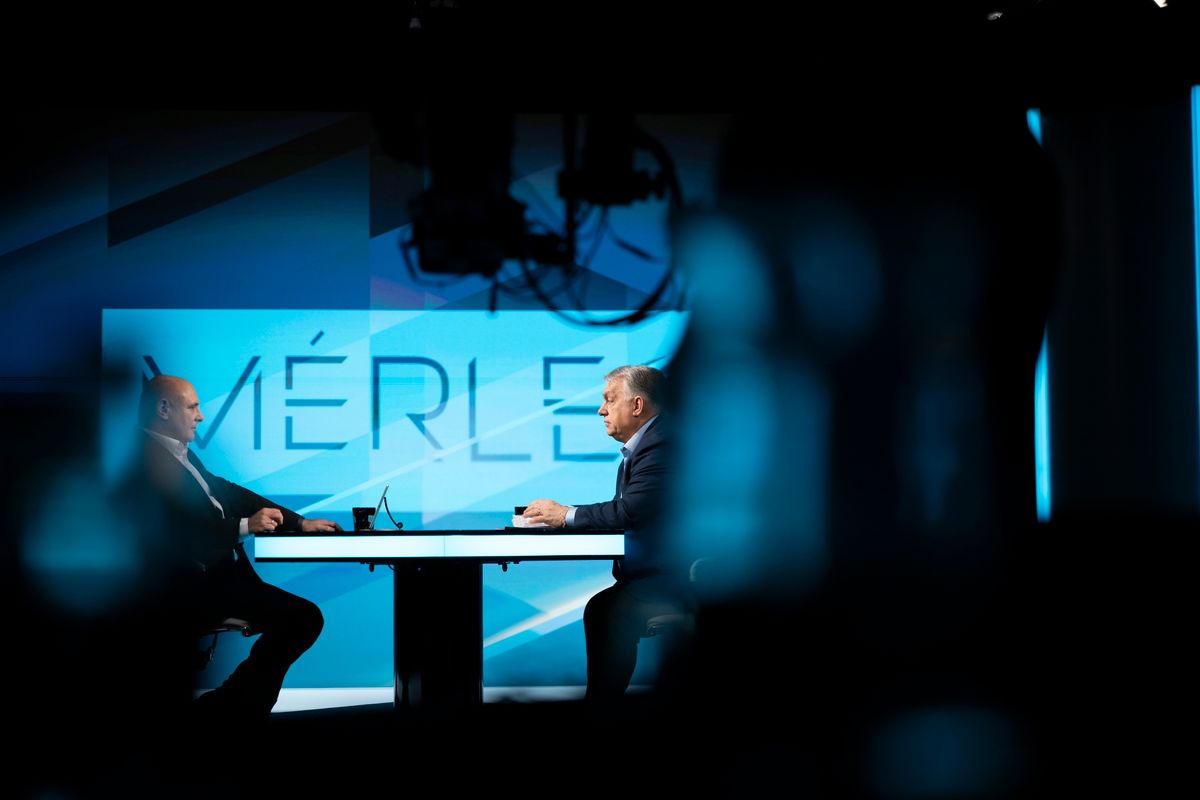
Prime Minister Viktor Orban gave an interview to commercial broadcaster ATV.
2026. 03. 05. 14:54
Speaking about the war in Ukraine, Orban noted that he has spoken with Vladimir Putin several times. According to the prime minister, the Russian president said that Russia has defined military objectives it intends to achieve. PM Orban added that Putin is not interested in a ceasefire because he believes the other side would use it to strengthen its position.
Orban said that his own task is to ensure that oil continues to flow to Hungary, and he has set this as a clear objective. He said he is willing to speak with Volodymyr Zelensky, and that foreign ministers have been preparing such a meeting for months, but so far they have not been able to reach an agreement. As he put it:
Ukraine has certain demands that it wants to enforce in negotiations. We can already say in the preparatory phase that we cannot meet those demands, and in fact we reject them. We do not want to give up cheap Russian oil and gas, even if the Ukrainians demand it. We do not want to give them money, and we do not want to support their war while that is exactly what they want.
If Hungary were openly blackmailed and gave in, he added, then it would be blackmailed again and again.
PM Orban highlighted that today, no one dares to claim that the Druzhba pipeline is not operational. Even the Ukrainians say that they are not supplying oil for political reasons, the prime minister pointed out, adding that the Ukrainians argue that they would be helping Russia if they supplied oil. “The Ukrainians want a change of government in Hungary. They openly say that they want a pro-Ukrainian government in Hungary. That is not in our interest,” Orban said, adding that for this reason he must break the oil blockade.
The prime minister pointed out that Ukraine has an agreement with the European Union under which Kyiv cannot endanger the EU’s energy security. “This is a legal matter. We are entitled to it. It is not a question of whether Ukraine wants to do it. The European Union should enforce it. And that moment will even eventually come,” he said.
PM Orban also said that the European economy is “in a miserable state” because there is no money. Countries supporting Ukraine must therefore go to bankers, take out loans, and hand that money over to Ukraine. According to the plan, Kyiv would repay these debts once it receives reparations from Russia.
Western states will only get their money back from Ukraine if Russia is defeated on the battlefield and forced into a peace settlement requiring Moscow to pay reparations,
Viktor Orban explained. He added that meetings of the European Council increasingly resemble real war councils.
“In every other European country there are austerity measures because their money is going to Ukraine,” he said. It is possible to reach agreements with the European Union, he added, but then the money “is gone in a flash.” He argued that the same logic applies to the war. If Hungary were to reach an agreement with Brussels on the war, on Ukraine’s EU membership, and on financial matters, the country would end up in exactly the same position as Western Europe. In Viktor Orban’s words, the West today resembles a cut flower: it is still colorful and impressive, but it has been separated from the soil that once gave it the energy needed for its beauty and attractiveness. He emphasized that austerity can be seen in every Western European country, while Hungary is the only country where there are no austerity measures in place.
Prime Minister Viktor Orban said that the openly stated concept represented by Germany is to continue the war and economically bleed Russia dry. According to this approach, Moscow would eventually be forced to accept peace terms it would otherwise reject.
The prime minister warned that military preparations must not be underestimated. At the same time, he said he is firmly convinced that Hungary can stay out of the conflict.
This will be the key word of the next four years: staying out,
Viktor Orban emphasized. He said he feels the historical weight of the issue, noting that neither Istvan Tisza nor Miklos Horthy succeeded in the past. The prime minister said he does not see any political leader in Hungary today who would have a better chance than he does of achieving that goal. “That is why I am undertaking the next four years and why I am running in the election,” he stated.
“There is a European war: on one side Russia, on the other side Ukraine and the European Union states supporting Ukraine. Hungary, Slovakia, and perhaps to some extent the Czech Republic are the ones saying: ‘This is not our war,’” he said. Ukraine and the European Union want to persuade Hungarians as well to get involved in this war.
The prime minister also spoke about the risks faced by the 75 sites currently guarded by the Hungarian Armed Forces. Orban recalled that the Ukrainians blew up the Nord Stream gas pipeline.
The Ukrainians as a nation, their government, and Zelensky as president are brave enough to blow up the Russian-German gas pipeline when it serves their interests.
“If they dared to do that to the Germans, why wouldn’t they dare do it to Hungary?” he asked. He summarized the situation by saying that “the Ukrainians are capable of anything,” and in such a tense situation Hungary must also be prepared for anything.
Viktor Orban said it is possible that soldiers could appear on the streets if the terrorist threat increases due to the Middle East situation.
The prime minister noted that Hungary has strategic reserves, but a rise in global oil prices would lead to higher fuel prices, shortages could occur, and inflation would increase.
This does not work in favor of the governing parties, but against the government. There is cooperation between the Hungarian opposition and the Ukrainians. The Ukrainians want a change of government, and they are looking for the tools that could help achieve it,
he said.
Viktor Orban said that a test run already occurred four years ago, when a Ukrainian drone flew over Hungarian territory. “At that time we failed, but I sent everyone to a retake exam. Now we would pass,” he remarked. He added that he hopes soldiers will not have to appear on the streets, but if necessary he will not hesitate to deploy them.
The prime minister also stated that the Tisza Party is receiving significant funding from Ukraine. He referred to a classified written report and suggested that “workers of the Hungarian public sphere” should request the declassification of the document if they want to know its contents.
If there is such a request, I see no obstacle to it, and everything will be found there,
he said, adding that the keepers of the classified material would decide on declassification. Asked how much money is flowing from Ukraine to the Tisza Party, PM Orban replied: “significant.” He added that the funds are being used to build IT and mobilization systems. When the interviewer noted that under Hungarian law such funding would constitute a crime if proven, the prime minister said he hopes that the appropriate legal proceedings are already underway.
PM Orban added that he had said everything he could on the matter and recalled that foreign interference also occurred in the previous election campaign, referring to the issue of the so-called “rolling dollars”. At that time, the State Audit Office imposed heavy financial penalties.
He emphasized that the government side does not support any parties or political forces abroad. However, it does have allies because European politics is organized through party alliances. “But dollars, euros, or any money cannot be rolling there,” he said, because that would violate sovereignty and break the law.
Asked whether Hungary had turned to the European Union or NATO regarding the violation of Hungarian sovereignty, the prime minister replied that NATO does not deal with political matters and that appealing to Brussels would be pointless because political opponents are financed from there as well.
You do not need to believe in conspiracy theories to imagine what a huge stone would fall from hearts in Brussels and Kyiv if the national government in Hungary lost the election. That is what they are waiting for and working toward. They support these actors financially and politically. I cannot ask for help from someone who is colluding with my opponent against me,
the prime minister said.
Viktor Orban also said that, according to the chairman of Hungary’s energy company MOL, there is no obstacle to transporting cheap Russian oil to Hungary through Croatia via the Adriatic route. He added that if Hungary were to support Ukraine with money and weapons, allow Ukraine to join the European Union, or give up blocking the 90-billion loan linked to the oil blockade, Brussels would be very pleased.
“The most important question for Europe’s future is whether Hungary has the right to stay out of a mistaken military concept leading to war. We are not important to the European Union because our GDP or our army is large. Hungary is important because it represents a dangerous example,”
the prime minister said.
He stressed that the real question is not whether cooperation with the European Union is possible, but what Hungary’s national interest is. Giving money to Ukraine, he said, would mean Hungary would also join the group of countries forced to impose austerity measures. Elsewhere in Europe, he added, there are no benefits because those countries’ money is going to Ukraine.
For Hungary, peace is the most important strategic issue, Viktor Orban said.
The prime minister also spoke about how Fidesz enjoys lower support among those with higher levels of education. He explained that graduates see the world differently than manual workers. There are parties that continue to stand on the ground of common sense and reject highbrow intellectual arguments about the things of life.
According to the prime minister, many such ideas have already failed in the West, including migration policies and the values of multiculturalism. The liberal world has come to an end, he said, and Donald Trump is the symbol of that change.
Speaking about cases involving bailiffs, the prime minister said that the prosecution service operates independently of the government. He emphasized that he never interferes in matters where intervention would be inappropriate and that he strictly observes constitutional rules. Hungary has a parliamentary system, not a presidential one, he said.
Regarding the battery factory in the town of God, Viktor Orban stated that no problems have occurred outside the plant itself.
Concerning incidents inside the Samsung facility, the prime minister said that the authorities are investigating everything.
Hungary has the strictest environmental regulations in place. The safety and health of Hungarian people come first,
he said, highlighting that no formal complaints had been submitted, which is why the government had not discussed the matter at a cabinet meeting. “We will protect every person,” he stated.
Speaking about the case connected to the correctional institution in Szolo Street, Prime Minister Viktor Orban said that in the first stage the perpetrators slipped out of the authorities’ hands. A second procedure was launched one or two years later, when they were finally able to catch them. He said the lessons had been learned and a systemic reform had been introduced. Previously, correctional institutions had been overseen by the social sector, but this approach did not work. As a result, these institutions were placed under the authority of the prison service. Although the individuals involved are young people, they are still offenders, PM Orban explained. In his view, the current system will work better than the previous one.
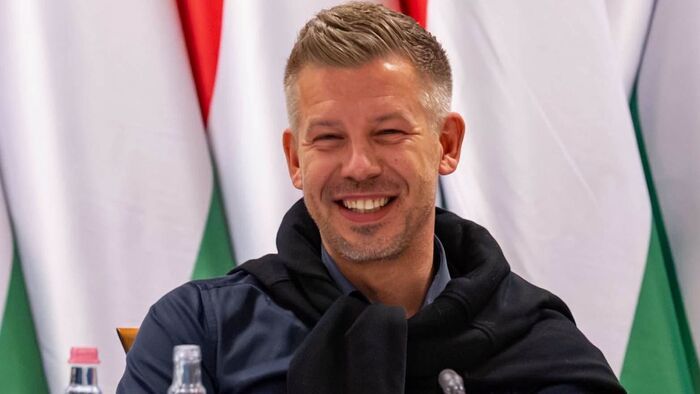
Referring to recent comments by Peter Magyar, who called for fixing fuel prices, the prime minister said that
the demand by the Tisza Party's leader is nonsense.
Fuel prices are high because there is a war going on and because the Ukrainians are blocking Hungary's access to cheap Russian crude oil, while Peter Magyar and his colleagues support Ukraine's policies and are responsible for this situation, the prime minister stated, adding that the Tisza Party's expert is lying or simply lacks information when he says that fuel taxes are high.
Viktor Orban said the government does have a plan for introducing a maximum price if necessary, but he would prefer to avoid implementing it.
Asked about the possibility of a televised debate between prime ministerial candidates, PM Orban said he only debates with sovereign individuals. He does not consider the leader of the Tisza Party to be sovereign, because the Ukrainians and Brussels are holding him in their hands.
“I would not recommend that any Hungarian prime minister enter into a debate with a person financed from abroad,” he said. Viktor Orban added that he debates with Peter Magyar’s “masters” in Brussels every week and occasionally also with Ukrainian President Volodymyr Zelensky, whom he described as Peter Magyar’s “brother in arms.”
The prime minister said that Fidesz is performing well and dismissed opinion polls suggesting that the governing parties are not leading.
“We are on track for victory. Why should we speculate about defeat?” PM Orban asked. He said he does not believe the surveys indicating otherwise and argued that the real question is not whether he believes them, but whether they are relevant.
Hungarian society and the governing parties stand on the same side regarding major civilizational questions, he stated. He pointed out that the government had implemented measures during the current term that were not promised during the 2022 campaign, citing the Home Start program and the introduction of a 14th-month pension payment as examples.
Looking ahead, he said the decisive issues will be Ukraine and energy. Hungary must stay out of the war, and he does not see any other political force capable of keeping the country out of the conflict. When I add all this up, we have to win,
he said.
Viktor Orban also said that after the election the country must function as one. According to the prime minister, technological has made it it possible to remain anonymous, and as a result opponents have become enemies. He said the pro-government community is broadly characterized by civic culture and an effort to follow Christian teachings. PM Orban added that he is proud of his political community and that he himself has invested a great deal of work in building it. He also noted that the most active supporters are the easiest to reach.
In the end there will be a major mobilization race. In the end we must bring every supporter to the ballot box. If we succeed in that, we will be fine,
the prime minister said regarding the election outlook.
Speaking about child poverty, Viktor Orban said the risk rate in Hungary stands at 23 percent. The EU average, he added, is 24.2 percent, which is higher than Hungary’s figure. Hungary’s rate is also high, he acknowledged, but “we are doing this well. We just have not finished the job.” He said that the share of people at risk of poverty or social exclusion in Hungary is 19 percent, compared to an EU average of 21 percent.
According to the prime minister, the most important priority is to increase wages and ensure that everyone has a job. If people have work, child poverty can be addressed; if there is no work, only welfare remains, he said, adding that he still sees around 300,000 people who could be integrated into the labor market.
He noted that indicators began to improve immediately when child-related benefits were linked to employment. The recent 11 percent increase in the minimum wage, he said, primarily helps those below the middle class rather than the middle class itself. He also pointed out that full tax exemptions for mothers with children benefit everyone. The government’s strategy, he said, is to ensure that people who raise children do not end up with a lower standard of living than those who do not have children.
Asked about the Democratic Coalition’s demand to abolish voting rights for ethnic Hungarians living outside Hungary’s borders, Viktor Orban said elections in Hungary are properly supervised by electoral authorities and anyone who commits fraud is held accountable.
Responding to suggestions that elections might be postponed, the prime minister said such claims are nonsense. He added that stability itself is a value. Hungary has never held early elections, precisely because the state has a self-defense function.
When asked whether he could imagine cooperation with a strong opposition if the party alliance of the Fidesz and Christian Democrats (KDNP) wins but faces a powerful opposition in parliament, Viktor Orban said he can work with anyone.
The homeland can never be in opposition. The homeland stands above us.
He emphasized that stability, institutions, and statehood all have a self-defensive function in Hungary. Some nations, he said, have an instinct that without stability, order, governance, and a clear direction they will fall apart. He believes Hungarians are such a nation. Therefore, institutions must be respected and elections must be taken seriously, because they hold the country together. State institutions must operate honestly and properly, elections must be organized fairly, conducted properly, and the results must be accepted, he said. This, he stressed, is not a party issue.
Asked whether, if he wins the election, he could imagine cooperating with Peter Magyar on certain issues, PM Orban said he can cooperate with anyone. There is no one he would automatically exclude from cooperation. It may not always feel comfortable or be something he would be proud of, he said, but that is ultimately irrelevant, Viktor Orban emphasized.
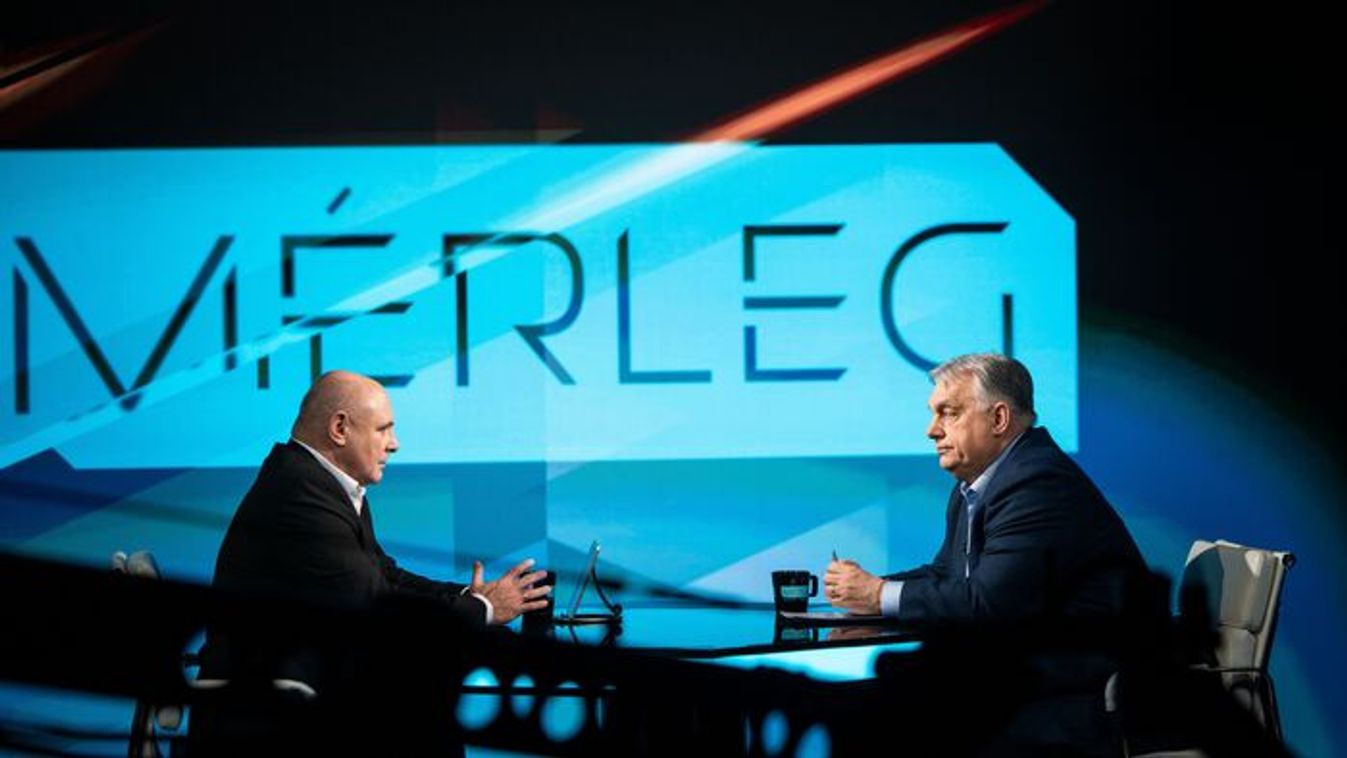
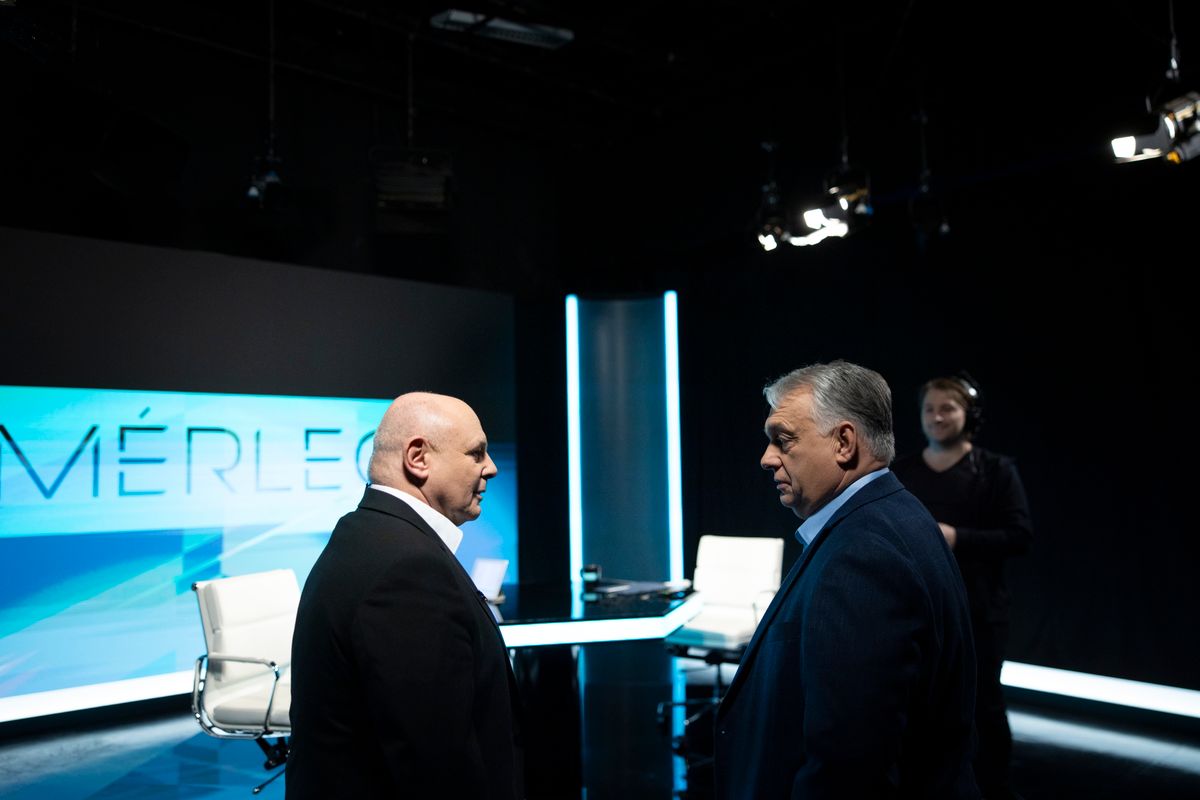
Cover photo: Prime Minister Viktor Orban (right) and host Egon Ronai during the broadcast of the program Merleg, streamed on ATV’s YouTube channel on March 4, 2026 (Photo: MTI/PM's General Department of Communication/Zoltan Fischer)
Ne maradjon le a Magyar Nemzet legjobb írásairól, olvassa őket minden nap!
- Iratkozzon fel hírlevelünkre
- Csatlakozzon hozzánk Facebookon és Twitteren
- Kövesse csatornáinkat Instagrammon, Videán, YouTube-on és RSS-en

A legfrissebb hírekért kövess minket az Magyar Nemzet Google News oldalán is!
Címoldalról ajánljuk
Tovább az összes cikkhez