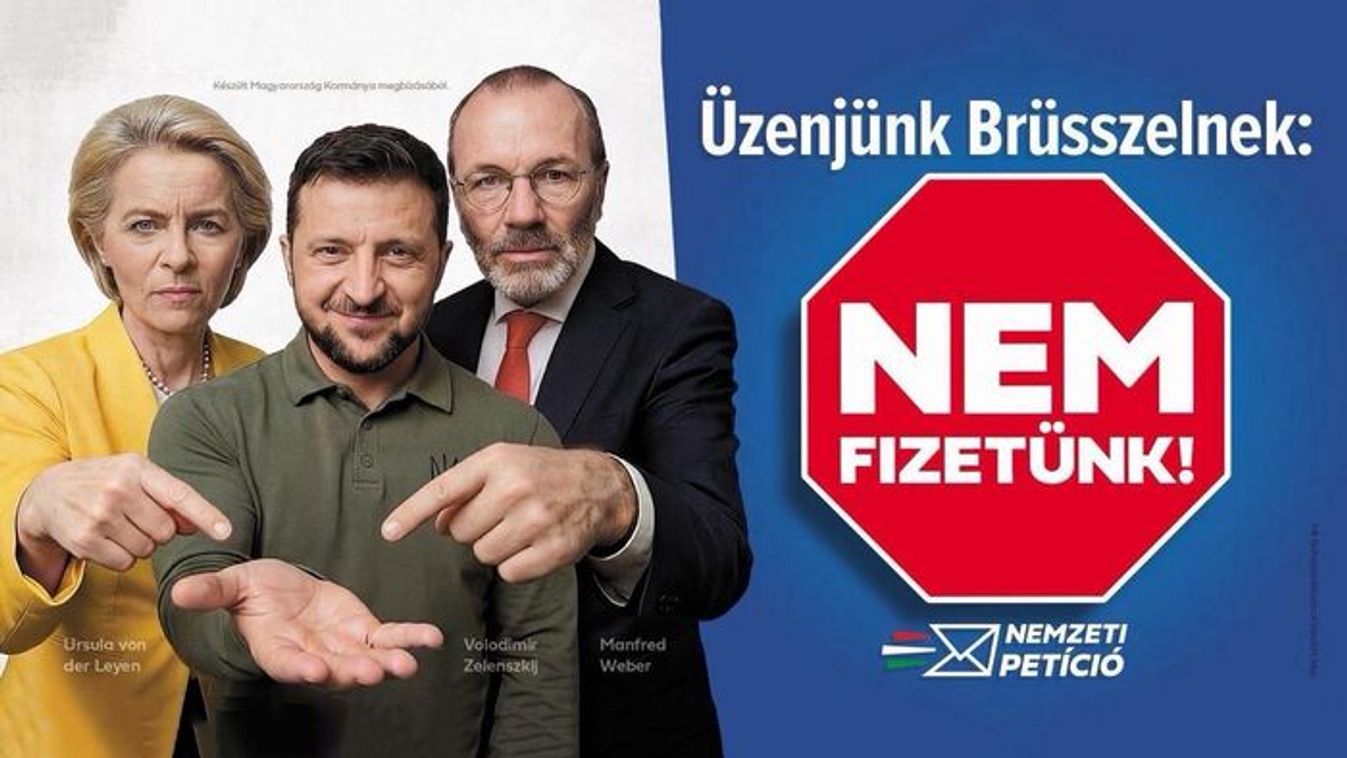
No to War, No to Funding Ukraine, No to Higher Utility Prices — National Petition Launches

The government is once again seeking the public’s opinion. Every Hungarian will now have the opportunity to say no to financing Ukraine and the war.

2026. 01. 26. 14:12
VéleményhírlevélJobban mondva - heti véleményhírlevél - ahol a hét kiemelt témáihoz fűzött személyes gondolatok összeérnek, részletek itt.

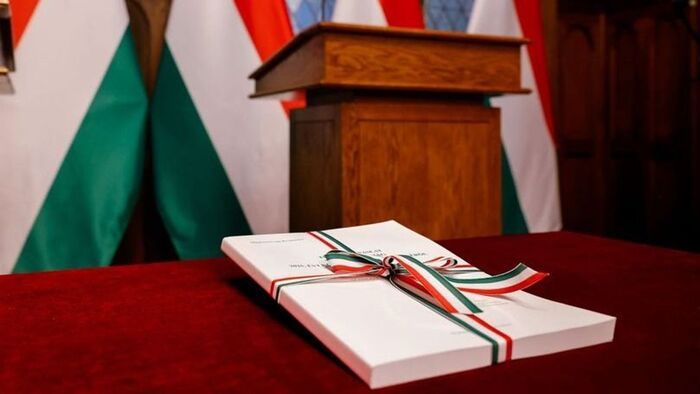
Hungary’s government has launched a new political initiative in the form of a national petition, aimed at strengthening the country’s position in ongoing debates within the European Union through broad public support.

Nemzeti konzultáció Orbán Viktor Kaposvár DPK
Photo: /Prime Minister's Office Communications Department/Zoltan Fischer

According to a government statement, Hungary will not take part in financing the Russia–Ukraine war, will not contribute to covering the costs of Ukraine’s state operations over the next decade, and will not accept higher household utility prices as a consequence of the war.

Government communications stress that the petition goes beyond any single concrete decision. In a broader sense, it seeks to define the limits of EU financial commitments. The government warns that shifting the costs of war onto member states and their citizens could have serious long-term economic and social consequences, and that such decisions cannot be made while ignoring national interests.

Magyar Nemzet has previously reported on the political background of the initiative. Prime Minister Viktor Orban presented the questions on the petition at an anti-war event organized by the Digital Civic Circles (DPK) in Kaposvar. There, he said the coming years will require broad national unity to keep Hungary out of the armed conflict and its economic fallout.

PM Orban emphasized that government action alone is not sufficient, stating that 

without public support, a policy aimed at keeping the country out of war cannot be sustained. 

He argued that a shared, common banner is needed under which citizens who reject the war can unite, backed by lasting political will.

I will be where I need to be, and I will hold a flag under which people can gather,” PM Orban said. “Gathering under such a banner is always a matter of pride. But a good state leader alone is not enough. Only full national unity can keep us out of the war.

The national petition thus serves both domestic political and EU-level objectives. The government intends to use public opinion as a mandate to push back against proposals that would make the financing of the war and Ukraine a shared European obligation. Further details on the petition and its implementation are expected in the coming period.

PM Orban: Europe Is Not Heading Into War — It Is Already There

In a speech delivered in Kaposvar, Prime Minister Viktor Orban emphasized national unity, while using historical reflections and local development examples to explain the government’s rural policy and economic direction. According to the prime minister, agriculture and food self-sufficiency are matters of national sovereignty, and EU trade agreements—particularly the Mercosur deal—pose a threat to Hungarian producers.

He described Hungary’s utility cost reduction policy as a public service, one the government intends to preserve through investments in energy independence, including the Paks II nuclear project and renewable energy developments, despite constant pressure from Brussels. Addressing the Russia–Ukraine war, PM Orban said 

Europe has already been drawn into the conflict, warning that its financing could become a long-term debt trap. 

This, he said, is why the government launched the national petition to reject war-related obligations.

The petition has gained added urgency following a recent EU summit at which European Commission President Ursula von der Leyen presented a new $800 billion Ukraine financing plan to EU leaders—a proposal that was leaked to the press the following day. According to Csaba Domotor, a Fidesz MEP, the plan effectively subordinates the next decade to Ukraine policy.

Domotor noted that the $800 billion Ukraine package is designed to fund spending both during the war and throughout the postwar reconstruction period.

In the background—or perhaps no longer just in the background—are the international corporations that stand to profit enormously from all this,” the politician said. Citing The New York Times, Domotor claimed that BlackRock could reap massive gains from postwar reconstruction, noting that "the asset management giant is already being involved at the planning stage.

“This activity also explains two things,” Domotor added. “First, why Peter Magyar speaks of enormous economic opportunities tied to Ukraine's reconstruction. Second, why a growing number of candidates are being recruited by his party from major international corporations—whether from a global oil company or a gas trading firm,” he said, referring speifically to Istvan Kapitany and Anita Orban, who have recently been identified as Tisza Party politicians.

Cover photo: Illustration (Source: Facebook)

Komment

Összesen 0 komment

A kommentek nem szerkesztett tartalmak, tartalmuk a szerzőjük álláspontját tükrözi. Mielőtt hozzászólna, kérjük, olvassa el a kommentszabályzatot.


Jelenleg nincsenek kommentek.

Szóljon hozzá!

Jelenleg csak a hozzászólások egy kis részét látja. Hozzászóláshoz és a további kommentek megtekintéséhez lépjen be, vagy regisztráljon!

A téma legfrissebb hírei

Tovább az összes cikkhez chevron-right

Ne maradjon le a Magyar Nemzet legjobb írásairól, olvassa őket minden nap!

Google News
A legfrissebb hírekért kövess minket az Magyar Nemzet Google News oldalán is!

Címoldalról ajánljuk

Tovább az összes cikkhez chevron-right

Portfóliónk minőségi tartalmat jelent minden olvasó számára. Egyedülálló elérést, országos lefedettséget és változatos megjelenési lehetőséget biztosít. Folyamatosan keressük az új irányokat és fejlődési lehetőségeket. Ez jövőnk záloga.