European Commission or Ukraine Commission? – Whose Interests Come First in Brussels?

Brussels has made it clear that in the situation surrounding the Druzhba oil pipeline it stands with Ukraine. "The European Commission today is more of a Ukraine Commission, representing Ukrainian interests," Peter Szijjarto reacted. Origo asked Peter Siklosi, senior research fellow at the Hungarian Institute of International Affairs, where it may lead in the long term if Brussels places the interests of a candidate country ahead of those of its member states.

2026. 02. 25. 17:15
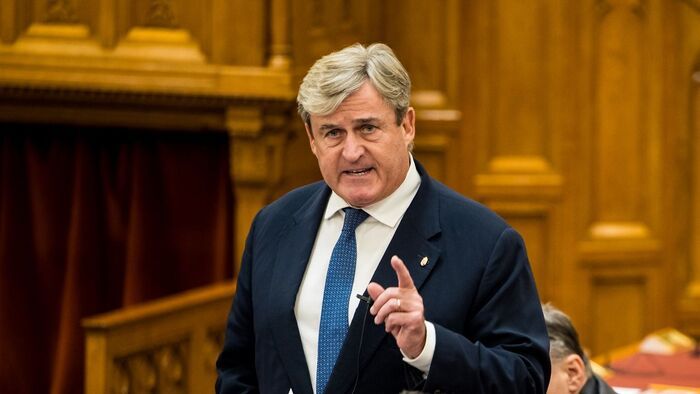
European Commission or Ukraine Commission? (Photo: AFP)
VéleményhírlevélJobban mondva - heti véleményhírlevél - ahol a hét kiemelt témáihoz fűzött személyes gondolatok összeérnek, részletek itt.

At the end of January, the southern section of the Druzhba oil pipeline was hit by an attack. Although the damaged component was repaired by early February, deliveries have not resumed since. Several officials of the European Commission have stated that they have no intention of putting pressure on Ukraine. In response, Peter Szijjarto said that "the European Commission today is more of a Ukraine Commission." Origo asked Peer Siklosi what room for maneuver remains for Hungary and Slovakia to resolve the situation if the Commission fails to act.

Szijjártó Péter úgy reagált, hogy „az Európai Bizottság ma inkább Ukrajna Bizottság”
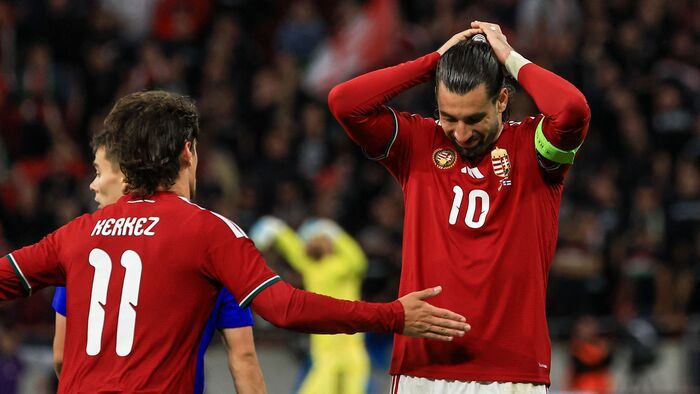
Peter Szijjarto reacted by saying that today the European Commission is more of a Ukraine Commission (Photo: MTI)

Is the European Commission Today More of a Ukraine Commission?

According to the expert, all signs indicate that the European Commission considers the Ukraine project more important, because for the federalists it is convenient if a crisis underpins their political agenda. In other words: more power for the central European institutions, for the Commission, and less for the member states.

So this is their main objective, and they are simply using the Ukrainian war and Ukraine itself to achieve it.

Ukraine previously claimed that the pipeline had been damaged in a Russian attack and was therefore technically unfit for transporting oil. This has been refuted by several parties, including  Peter Szijjarto. When asked about the technical damage, Peter Siklosi explained that it is highly likely that not the pipeline itself was damaged, but rather various auxiliary facilities located nearby. He added that this is a technical installation equipped with sensors. The Russians say the same, the Slovaks say the same, and the Hungarian side assesses the situation similarly. In addition, as he put it, indirect evidence is also available.

As an example, he noted that in earlier cases similar faults had been repaired much more quickly, whereas now it is being claimed that the system cannot be fixed.

In his view, this supports the conclusion that the issue is being used as a tool  to exert pressure. He believes it is aimed, on the one hand, to change the position of the Hungarian government and, on the other hand—now increasingly—to interfere in the elections. In recent times, statements, calling for Ukraine’s swift accession to the European Union have followed one another. The political will in Brussels was clearly reflected in the speech by Roberta Metsola, President of the European Parliament. "On enlargement, we must shift gears. I am President of a Parliament that overwhelmingly supports this process," she said in Munich. However, Viktor Orban keeps Hungarian interests in focus and therefore blocks Ukraine’s integration plans.

Asked whether the dispute could escalate further and have consequences in EU decision-making—or whether Ursula von der Leyen and her team are instead counting on a victory by Peter Magyar—the expert said:

Ursula von der Leyen and her team are clearly not merely hoping for this. They are doing everything in their power to make it happen.

Peter Siklosi pointed out that Viktor Orban and the Hungarian government hold a firm position not only regarding this matter but also in others, such as migration. He added that in several cases, including migration, it has become clear that Hungary was right. In his assessment, it is therefore obvious that everything is being done to ensure that, if possible, someone else leads Hungary. In his view, all illusions in this regard should by now have vanished.
The EU is also actively examining how to incorporate Ukraine’s 2027 accession into a peace agreement, possibly in the form of partial membership. Asked whether this is a political maneuver wrapped in the promise of peace in order to push Ukraine into the European Union as quickly as possible, he stated:

 The European Union is trying to frame the situation as if only two alternatives existed: one is the unlimited continuation of the war, the other is Ukraine’s accession to the European Union.

He argued that decision-makers do not even hear, and do not even wish to consider, the possibility of a third path. This third alternative, among others, is represented by the Hungarian government: a neutral Ukraine that belongs neither to Russia nor to the West. In his view, Europe should establish a strategic partnership with such a neutral Ukraine.

Ninety Billion Euro Loan for a Corrupt Ukrainian Regime

Since February 2022, the European Union and its member states have paid 193.3 billion euros to Ukraine. 

By comparison, between 2004 and 2024 Hungary received a net total of 73 billion euros in EU support, counting all sources and legal titles. This year, the European Parliament approved a 90-billion-euro joint loan to support Ukraine.

The European Commission has called on Hungary in a statement to comply with the agreement. Asked whether financial and military support of this magnitude is justified for a non-EU member state—while several member states are struggling economically—and what guarantees ensure transparent and accountable use of the funds in a country where systemic corruption has long been a recurring problem, Peter Siklosi said this is clearly a matter of values for the European Commission and certain member states. As he put it, 

in their view, continuing the war and supporting Ukraine are more important than using these same resources to stimulate the European economy or improve the living conditions of European taxpayers.

In response to the second question, he stated that there is no guarantee whatsoever that, as in the past, a significant portion of the funds will not disappear into the labyrinth of Ukrainian corruption and end up in private pockets.

In Ukraine, corruption is not a system error; it is the system itself,

he said. In his assessment, this is how it has always functioned, and during the war it functions even more so. In his view, there can be no doubt that it will continue to function the same way in the future.

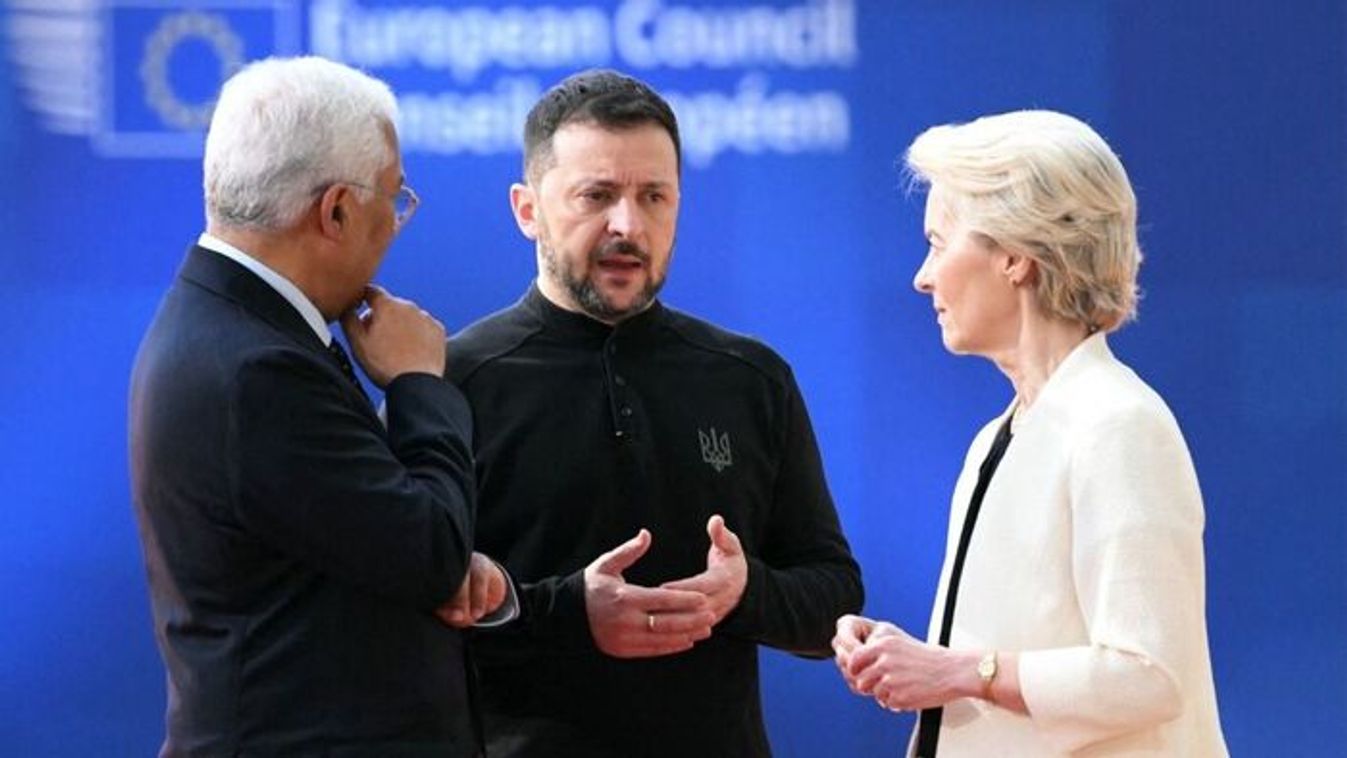
Cover photo: Antonio Costa, Volodymyr Zelensky and Ursula von der Leyen (Photo: AFP)

Komment

Összesen 0 komment

A kommentek nem szerkesztett tartalmak, tartalmuk a szerzőjük álláspontját tükrözi. Mielőtt hozzászólna, kérjük, olvassa el a kommentszabályzatot.


Jelenleg nincsenek kommentek.

Szóljon hozzá!

Jelenleg csak a hozzászólások egy kis részét látja. Hozzászóláshoz és a további kommentek megtekintéséhez lépjen be, vagy regisztráljon!

A téma legfrissebb hírei

Tovább az összes cikkhez chevron-right

Ne maradjon le a Magyar Nemzet legjobb írásairól, olvassa őket minden nap!

Google News
A legfrissebb hírekért kövess minket az Magyar Nemzet Google News oldalán is!

Címoldalról ajánljuk

Tovább az összes cikkhez chevron-right

Portfóliónk minőségi tartalmat jelent minden olvasó számára. Egyedülálló elérést, országos lefedettséget és változatos megjelenési lehetőséget biztosít. Folyamatosan keressük az új irányokat és fejlődési lehetőségeket. Ez jövőnk záloga.