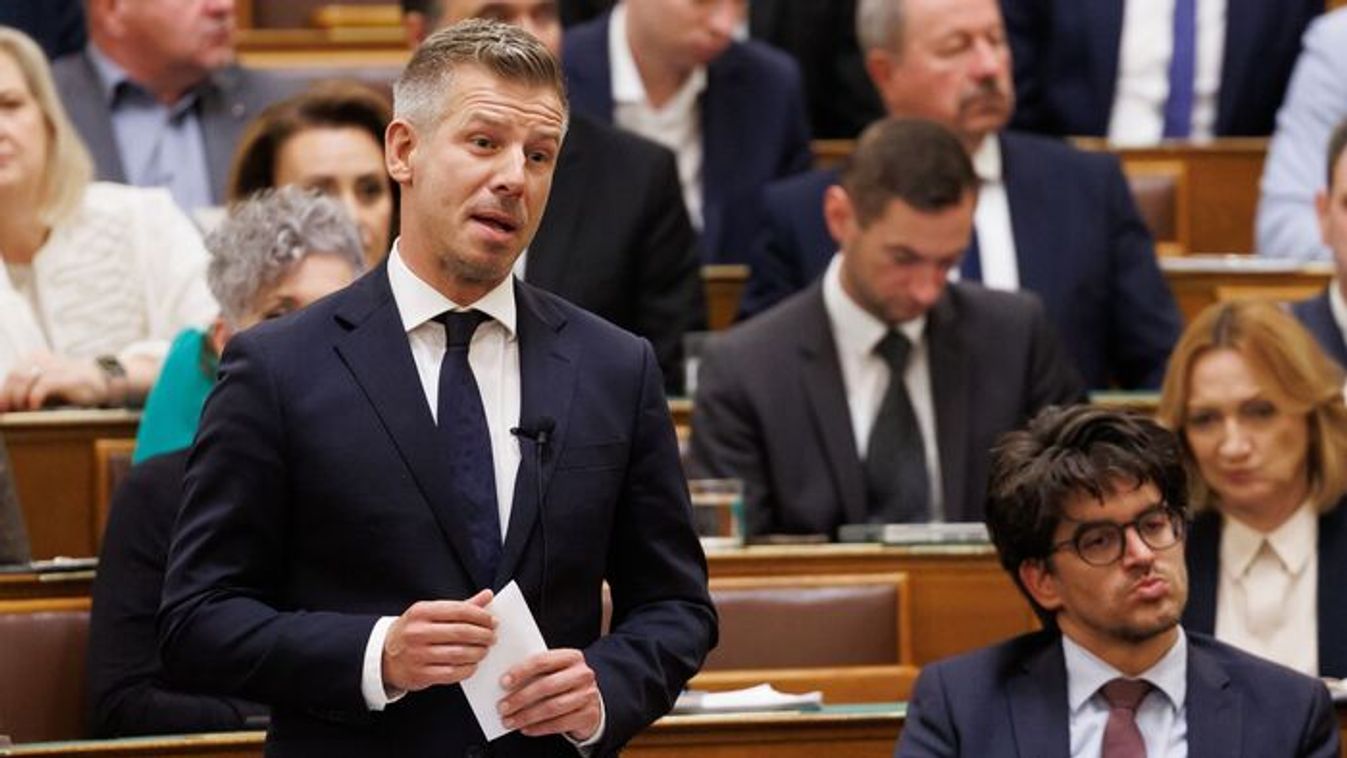
In a social media post, Deak laid out the stark contrast between policies advocated by Tisza Party chief Peter Magyar and those of Prime Minister Viktor Orban. "Magyar would ban cheap Russian energy, which would send energy prices soaring, while PM Orban is shielding Hungarian families with a protected price,” Deak wrote, responding to the government’s decision at Monday’s extraordinary cabinet meeting to introduce the price cap measure amid the sharp rise in global oil prices.

Deak, lead analyst of the XXI Century Institute, outlined five key aspects of the government’s decision.
1. Rising Energy Prices Across Europe
Energy prices are rapidly increasing in every European country due to the conflict in the Middle East, Deak wrote. According to his assessment, the situation has been made even more difficult in Western Europe after countries moved away from inexpensive Russian energy supplies. As a result, developments in the energy market are driving price increases across the continent.
2. Ukraine Is Exacerbating the Situation
Deak argued that, under these circumstances, it was a particularly unfriendly step for Ukraine to shut down the Druzhba oil pipeline, through which Hungary receives low-cost Russian crude oil. He added that the pressure and threats coming from Ukrainian President Volodymyr Zelensky are, in his view, openly aimed at helping Peter Magyar politically by creating supply difficulties that could benefit the Tisza Party’s campaign.
3. Cooperation Between Magyar and Zelensky
According to Deak, it is “completely clear” that Peter Magyar is colluding with the Ukrainian president. He recalled that Magyar had spoken about assassination plots several weeks ago, and that Zelensky subsequently issued death threat against Viktor Orban. Deák also referred to developments in Munich, where—through German mediation—an agreement was reportedly reached on banning Russian energy, while the prime minister of Croatia refused to continue Russian oil deliveries to Hungary.
4. Tisza’s Position Would Lead to Higher Prices
Deak also noted that not only Peter Magyar, but also Tisza affiliates Istvan Kapitany and Anita Orban have spoken about banning cheap Russian energy. “That is not surprising,” he wrote, “since both previously worked for Western LNG multinationals, meaning they are effectively lobbyists for those economic circles.” Such a move, he argued, would bring an end to Hungary’s utility price reduction policy and lead to significant price increases.


Szóljon hozzá!
Jelenleg csak a hozzászólások egy kis részét látja. Hozzászóláshoz és a további kommentek megtekintéséhez lépjen be, vagy regisztráljon!