Fidesz Starts New Year With Clear Advantage as Tisza Loses Ground

Hungary is heading into another parliamentary election year, and based on recent political trends, the governing parties appear well positioned. With national elections set for April, the ruling Fidesz–KDNP alliance enters the campaign season from a position of strength, while the opposition Tisza Party—led by Peter Magyar—has been losing momentum amid mounting controversies.

2026. 01. 01. 16:16
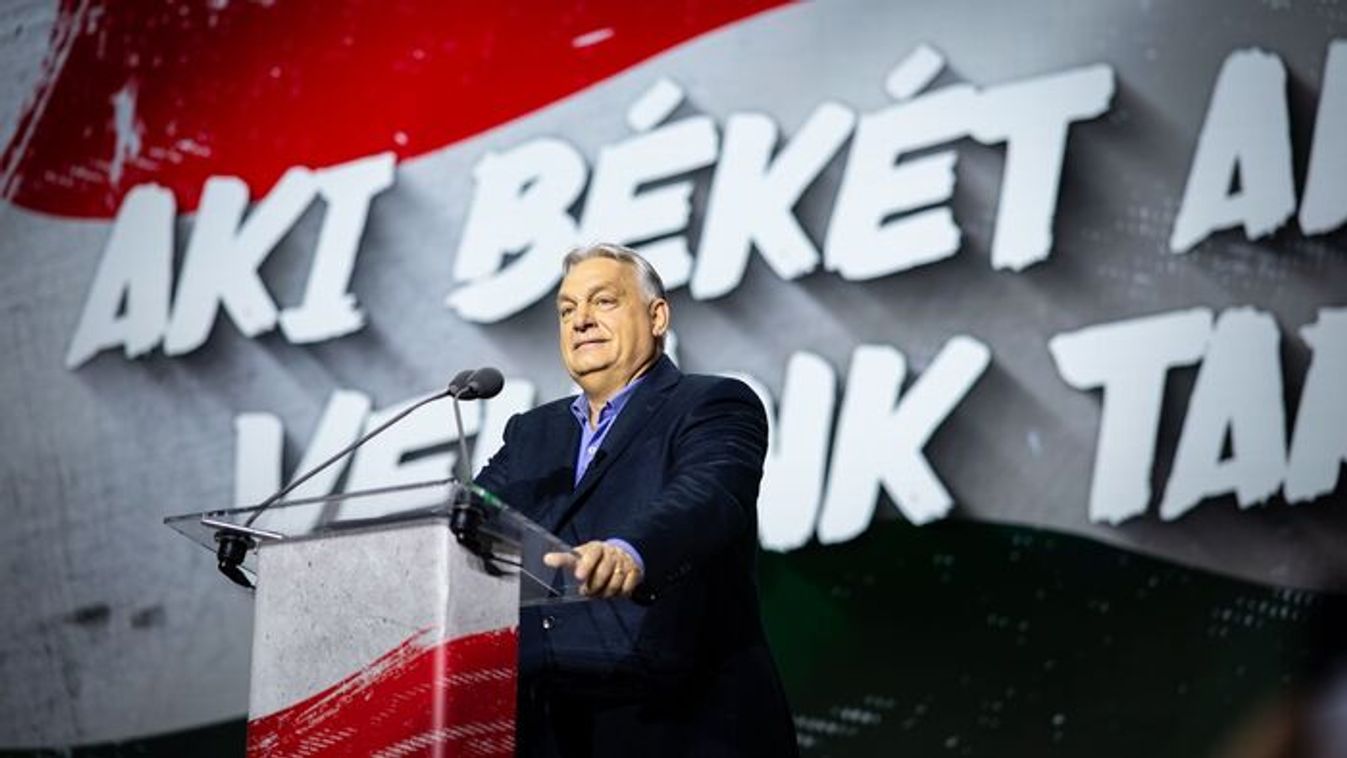
Hungary's Prime Minister Viktor Orban (Photo: Prime Minister's Office Communications Department/Zoltan Fischer)
VéleményhírlevélJobban mondva - heti véleményhírlevél - ahol a hét kiemelt témáihoz fűzött személyes gondolatok összeérnek, részletek itt.

With parliamentary elections to take place in April, the coming months promise to be intense in Hungarian politics. Although the official campaign period - starting fifty days before polling day - has not yet begun, both sides have already been mobilizing supporters. The governing parties have moved decisively, while the opposition has struggled to maintain momentum.

DPK gyűlés Szeged Orbán Viktor
Fidesz–KDNP can look forward to 2026 with confidence (Photo: Prime Minister's Office Communications Department/Zoltan Fischer)

Both sides will be focused on mobilizing their voters and winning over additional voters. In this situation, it is worth reviewing how the right and left wings are approaching the final stretch.


A Strong Start to the 2026 Election Year

Following a series of successful initiatives in 2025, Fidesz–KDNP enters 2026 with confidence. The party began mobilizing early, launching the “Fighters’ Club” initiative and later expanding its grassroots outreach through the Digital Civic Circles (DPK) movement. These efforts culminated in a nationwide anti-war tour, with packed events held in the last two months in Gyor, Nyiregyhaza, Kecskemet, Mohacs, and Szeged.

All five events were sold out—clear evidence, supporters say, of the broad public backing for the government’s pro-peace stance.

The DPK movement’s first nationwide gathering in September, along with the October 23 Peace March, also drew massive crowds, reinforcing the sense of growing momentum behind the governing coalition.

Polls Show a Widening Gap

In addition to grassroots mobilization, government policies aimed at supporting families and retirees are bolstering Fidesz-KDNP’s position. Measures such as the “First Home” housing program, the introduction of a 14th-month pension payment, and the expansion of income tax exemptions for mothers have strengthened voter support.

According to the Hungarian Social Research Institute—widely regarded as the most accurate pollster during the 2022 election—Fidesz–KDNP now holds a commanding lead over the Tisza Party. 

By the end of 2025, the governing alliance had widened its advantage month by month to 13 percentage points.

Current figures place Fidesz–KDNP at 51 percent, while the Tisza Party seems to have hit a plateau at 38 percent. If an election were held this Sunday, only three parties would enter parliament: Fidesz–KDNP, the Tisza Party, and the Our Homeland Movement, which would narrowly clear the threshold at 5 pecent.

A Difficult Year for Magyar and Tisza 

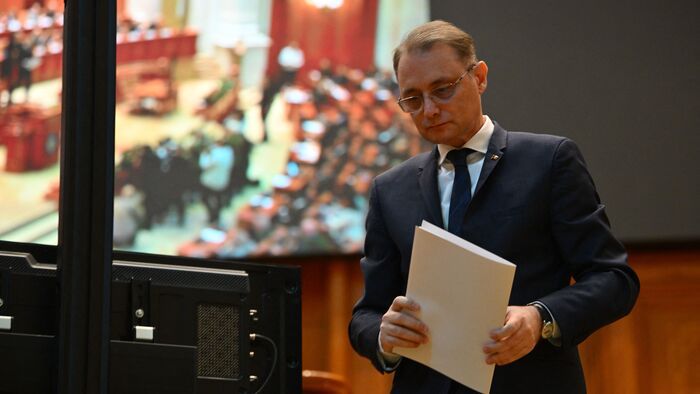
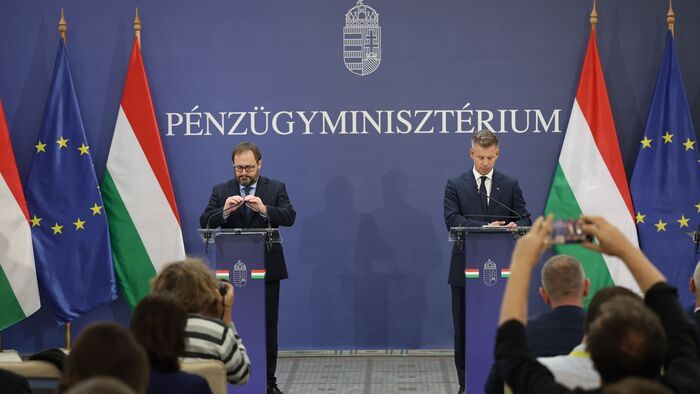
By contrast, 2025 proved to be a difficult year for Peter Magyar and his Tisza Party. A series of scandals weakened his position in the campaign race and the party struggled to set the political agenda. Data leaks, internal controversies, and questions surrounding foreign involvement in party operations damaged credibility and eroded public trust.

Tisza Párt, Magyar Péter, Kocsis Máté, 

Facebook
The Tisza Party has had a weak year (Source: Facebook)

The Tisza Party also failed to match the governing parties in terms of grassroots mobilization. While Magyar tried to mobilize in several cities where government-backed peace rallies were held - in Gyor, Kecskemet and Szeged,

turn out at his events was sparse. In multiple cities, only a few hundred supporters showed up. 

Even the contrast between major demonstrations was stark: while more than 80,000 people gathered at Budapest’s Kossuth Square for the culmination of the national Peace March on October 23, only about 45,000 attended the Tisza event at Heroes’ Square, according to mobile network data.

Alarm Bells Sound for the Opposition

In light of all this, it is not surprising that reality is beginning to dawn on the members of the "manipulation roundtable". Leftist-liberal-leaning research institutes have been publishing surveys for months claiming that Tisza is far ahead of Fidesz in the party competition. However, these pollsters have already started putting out results that are closer to reality than their previous measurements. In addition, the heads of research companies have begun acknowledging the shift. Several analysts now concede that the Tisza Party’s momentum has stalled. Even figures previously sympathetic to the opposition have admitted publicly that the party’s rise has slowed significantly.

Most recently, it was Median's director, Endre Hann, who exposed Peter Magyar and his associates.

The momentum of the Tisza Party, which had been growing for many months and showing increasing support, has stalled,

stated Hann on Klubradio's political call in show. Now Median – which had previously consistently predicted a victory for the left-wing party – has joined the ranks of those analysts who have begun to sound the alarm bells.

Tisza Party Plans Tax Hikes

Recent revelations have further complicated matters. Reports surfaced about a data breach involving the Tisza Party, raising concerns that sensitive information on hundreds of thousands of supporters may have been exposed. Based on databases that were for a period freely accessible online, several Ukrainian developers were involved in the creation and testing of the Tisza Party App.

Additional scrutiny followed the leak of internal policy documents outlining a proposed austerity program that would significantly increase taxes and cut benefits.

The circumstances surrounding the Tisza data leak scandal raised concerns that the data of hundreds of thousands of Hungarians may have fallen into Ukrainian hands.

Recently, Index published the Tisza Party's austerity package. According to press reports, Aron Dalnoki led the team, which among others included Laszlo Lengyel and Peter Felcsuti, that worked on the collection of economic policy plans.

The hundreds of pages-long economic plan outlines a more radical transformation of the Hungarian tax system than anyone has proposed in recent decades.

According to media reports, the plan—titled Hungary 2027–2035: A Convergence Program—was developed with the involvement of several prominent economists. Though party leaders have attempted to distance themselves from the document and deny its existence, the contents have fueled criticism and intensified doubts among voters.

Cover photo: Hungary's Prime Minister Viktor Orban (Photo: Prime Minister's Office Communications Department/Zoltan Fischer)


Komment

Összesen 0 komment

A kommentek nem szerkesztett tartalmak, tartalmuk a szerzőjük álláspontját tükrözi. Mielőtt hozzászólna, kérjük, olvassa el a kommentszabályzatot.


Jelenleg nincsenek kommentek.

Szóljon hozzá!

Jelenleg csak a hozzászólások egy kis részét látja. Hozzászóláshoz és a további kommentek megtekintéséhez lépjen be, vagy regisztráljon!

A téma legfrissebb hírei

Tovább az összes cikkhez chevron-right

Ne maradjon le a Magyar Nemzet legjobb írásairól, olvassa őket minden nap!

Google News
A legfrissebb hírekért kövess minket az Magyar Nemzet Google News oldalán is!

Címoldalról ajánljuk

Tovább az összes cikkhez chevron-right

Portfóliónk minőségi tartalmat jelent minden olvasó számára. Egyedülálló elérést, országos lefedettséget és változatos megjelenési lehetőséget biztosít. Folyamatosan keressük az új irányokat és fejlődési lehetőségeket. Ez jövőnk záloga.